
Just What the Patient Ordered
2014-11-24 17:44:36byGuoLiping
China Pictorial 2014年11期
by+Guo+Liping
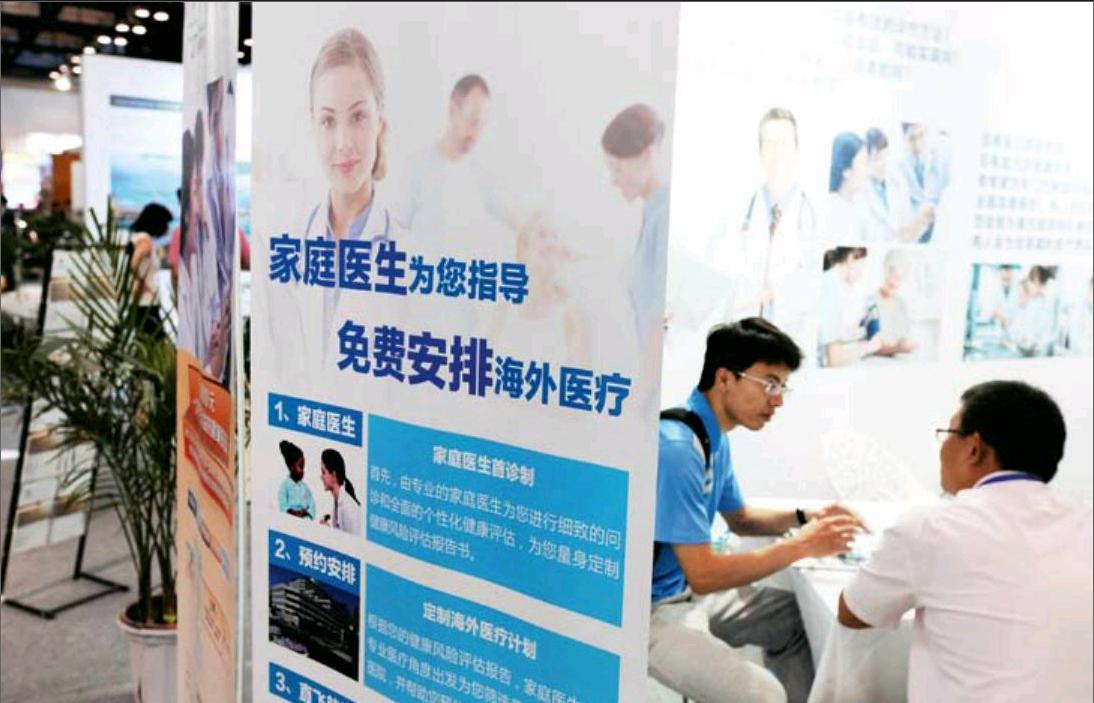
Modern Chinese people increasingly seek foreign medical services when traveling, such as anti-aging sheep placenta extract in Switzerland, face-lifts in South Korea, dental care in Hungary, and cancer screening in Japan, among many others.
Accordingly, global medical services have developed at breakneck speed. From 2006 to 2012, travelers going abroad for medical services doubled from 20 to 40 million worldwide. As revealed by Global Spa& Wellness Summit and Stanford Research Institute, in 2013, global medical tourism providers earned US$438.6 billion, accounting for 14 percent of total global tourism.
The Rise of Chinese Tourists
Over the past four years, 34-year-old Pan Zhihui conducted his annual check-up at the best hospital in Dongguan, Guangdong Province. The fee of 1,800 yuan was almost half the average monthly salary of an ordinary citizen in small and medium Chinese cities. Despite the lofty price, he still was not satisfied with the service: He had to queue for each item – blood test, electrocardiogram, and medical and surgical examinations. It took the whole morning from 8:00 a.m. to noon.
Employed as manager of the Japan/ South Korea division of a travel agency in Dongguan, Pan received an invitation from a South Korean hospital in spring 2013 to experience and investigate medical tourism opportunities in South Korea.
Pan was welcomed and accompanied by an interpreter who spoke Chinese. He chose a basic check-up among many pack- ages, including tumor screening, which cost over 2,000 yuan. To attract Chinese customers, some hospitals there offered discounts on check-ups.
Pan received the results of the checkup in Chinese in an email within 15 workdays.“I paid a little bit more for much better service,” he grinned.
Pan is one of many Chinese consumers who prefer to head abroad for medical services such as serious disease screening, regular check-ups, weight loss, and cosmetic surgery because they are not happy with the available options in their home city in terms of both cost and service quality. Such travels are referred to as “medical tourism.” Other factors fueling the rush are increasing affordability, health consciousness, and convenience for Chinese citizens traveling abroad.
In 2013, over 210,000 people visited South Korea for medical services, a fourth of whom were Chinese, contributing greatly to the local economy. “Contrasting travelers from other countries, Chinese tourists, the younger in particular, come for medical services such as general check-ups, plastic surgery, dentistry, and hair transplants,” explains Guo Shangxie, head of the Guangzhou office of the Korea Tourism Organization.
Greater numbers of Chinese faces can also be found in other popular medical tourism destinations such as Japan, Singapore, the United States, Thailand, and Switzerland. According to predictions from the Marketing Department of ParkwayHealth, the largest private healthcare service group in Asia, by the end of 2014, the tally of its Chinese customers will hit 1,000, mostly from first-tier cities such as Beijing and Shanghai as well as second-tier cities, who primarily seek check-ups and critical care such as treatments for cancer and cardiovascular disease.
Grabbing a Market Share
Medical tourism is still new to Chinese consumers, but already emerged elsewhere long ago.
During the early days of medical tourism development, Western developed countries primarily attracted patients with serious, often life-threatening conditions seeking sophisticated medical technology capable of providing treatment. Things have changed today. Tourists like Pan Zhihui, who initially travel for leisure and seek non-emergency medical services secondarily are becoming more commonplace.
China has shown some of the greatest market potential on the planet. Many countries are hunting for business opportunities in the emerging power. Korea Tourism Organization, for instance, has opened seven offices in China – the primary market for inbound flow and 2013 host of its Korea International Medical Tourism Convention.
Other countries are taking action as well. India, for example, has long been famous for its treatment of eye diseases, joint replacement, herbal medicine, and yoga. The government has encouraged investment in these sectors by offering tax deductions and exemptions for hospitals specializing in medical exports.
Singapore, known for physical examinations and stem cell preservation, has established Singapore Medicine, an international service that collaborates with many medical organizations, aiming to transform the country into Asias largest destination for medical-treatment-seeking vacationers from around the world.
Many governments, including those of South Korea, Japan, and India, have launched a new type of visa – the medical tourism visa – specifically intended for such tourists.
The rise of medical tourism has also hastened the development of related intermediary industries in China, including travel agencies and organizations specializing in medical tourism.
Chen Lixuan runs a commercial platform for high-end resource integration. He is planning to travel in Japan for four days, one of which he will spend in Tokyo getting a precise comprehensive examination for cancer risks and genes. Patients of the hospital can choose from three packages. The examination costs at least 10,000 yuan.
A Beijing intermediary agency, founded in 2006, provides services for more than 2,000 customers with its most popular products being anti-aging treatment using sheep placenta extract in Switzerland, stem cell treatment for diabetes in Germany, and physical exams in South Korea. “China has a huge potential market for medical tourism,” asserts Wu Qi, manager of its marketing department. “The market value of overseas medical tourism products in China might top a billion yuan.”
As a late-comer to the trend, China has yet to establish uniform standards for medical tourism services. “Most agencies have no experience and lack service awareness,”illustrates Wu. “Some dont do their homework on basic information about the institutions from which theyre offering services.”“We are experiencing rapid development of global medical tourism, which still faces legal risks,” remarks Zhang Caixia, deputy director of the Teaching and Research Section of Health Policy and Sanitary Regulation of the Management Department of the Traditional Chinese Medicine University of Guangzhou. “Customers need to be aware of risks before signing contracts with service providers.”
