The Daughter of Dunhuang
2014-11-24 05:32:53byLiShuyaUncredit
China Pictorial 2014年11期
by+Li+Shuya+Uncredited
As daughter of Chang Shuhong, who was dubbed the“guardian of Dunhuang Grottoes” and founder of Chinas Dunhuang studies, Chang Shana has lived a life far from ordinary. Despite lacking a college degree, she served as president of the former Central Academy of Craft Art for 15 years, and definitely not just because of connections of her father.
A Life Changed
The name “Shana” is a transliteration of the “Sa?ne” River in Frances Lyon. Chang Shana was born in Lyon in 1931. Her father, Chang Shuhong, was a young Chinese painter studying in France, and her mother, Chen Zhixiu, was her fathers cousin who was later admitted to école nationale supérieure des Beaux-Arts(ENSBA), the distinguished National School of Fine Arts in Paris, to study sculpting.
While growing up in France, Chang Shana began seeing major life changes in 1936. That autumn, at a bookstand by the Seine, Chang Shuhong discovered a picture album about the Dunhuang Grottoes. Soon, upon seeing the abundant silk paintings plundered from Dunhuang on display in the Guimet Museum, he became even more impressed. Her father decided to return to China to explore Dunhuang, a treasure trove of myriad Chinese cultural relics and art. Coincidently, the National Peking School of Fine Arts invited him to serve as a professor, and he accepted the offer instantly.
In 1937, Chang Shana, who couldnt even speak Chinese at the time, arrived in China by ship with her mother to reunite with her father. Before they arrived in Beijing, the July 7th Incident broke out, which heralded the start of Chinas War of Resistance against Japanese Aggression from 1937 to 1945. Soon, Beijing fell to the enemy and Chang and her mother fled to different cities to take refuge. Finally, the family settled in Chongqing, where the National Peking School of Fine Arts had relocated. In 1942, the National Dunhuang Art Institute was established. Chang Shuhong acted as the vice head of the preparatory committee and later served as its first president. A year later, 12-year-old Chang Shana headed off in a big truck from Chongqing with her parents. After bumping along roads for an entire month, the family finally arrived at the dusty, desolate, yet exciting Mogao Grottoes in Dunhuang.
Raised in a Cave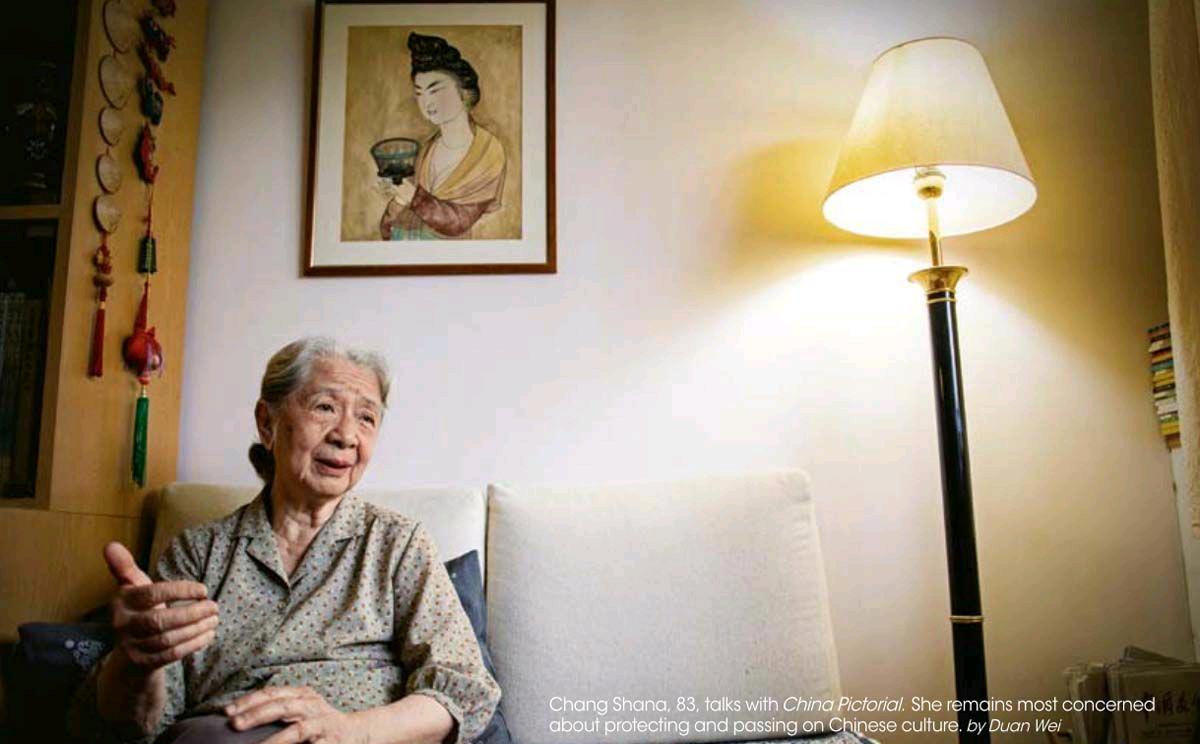
Years later, Chang Shana still remembers her first dinner in Dunhuang. It was noodles in plain water, with the only seasoning being salt and vinegar.
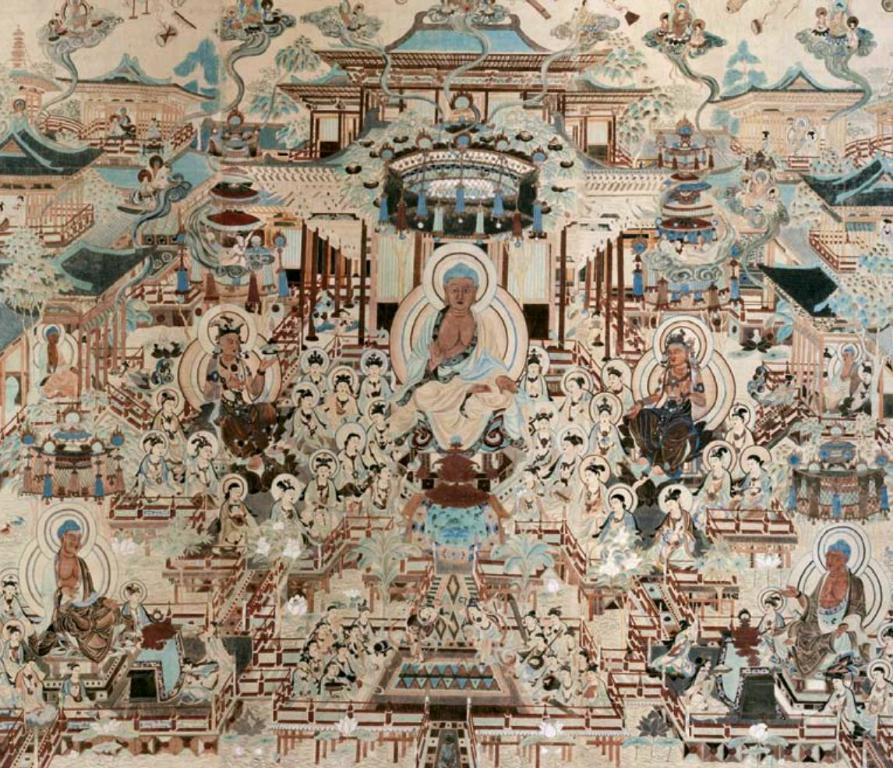
Dubbed Thousand-Buddha Cave by locals, Dunhuang Mogao Grottoes is the largest existing Buddhist treasure chest with the most abundant collection. However, during the late Qing Dynasty(1368-1644), many priceless cultural relics were looted by Western explorers. Wind and sand erosion coupled with disrepair for centuries left the caves dilapidated. When Chang Shuhong arrived, he felt protection was the most urgent task.
However, Changs wife thought otherwise. Actually, she ob- jected to settling in Dunhuang at first. In the spring of 1945, Chen, who could no longer bear local living conditions, left and announced in newspapers her intention to divorce her husband.
The divorce was a heavy blow to 14-year-old Chang Shana, but the girl grew up fast. To take care of her younger brother, she quit school in nearby Jiuquan and returned to Dunhuang. Later, her father made arrangements for her with a local school. Except for occasionally attending school for classes and exams, she spent most of her adolescence in Mogao Grottoes.
The girl quickly fell in love with Mogao. She studied according to a schedule set by her father: Every day, she practiced calligraphy by copying scriptures from the Tang Dynasty (618-907), read French for an hour, studied Western art history as well as Chinese art history, and imitated murals from different dynasties in the caves in order to learn the styles of different eras.
Art of Design
In 1948, thanks to financial aid from a Canadian woman teaching in China, Chang Shana went to the U.S. to study. She attended the Art School of the Museum of Fine Arts, Boston, where she learned drawing, human anatomy, art history, painting, and design. After the founding of the Peoples Republic of China in 1949 and the breakout of the Korean War in 1950, she felt increased discrimination towards Chinese people. She decided not to stay to complete her degree. She worked part-time jobs to save enough money for a third-class steamer ticket and returned to China in December 1950.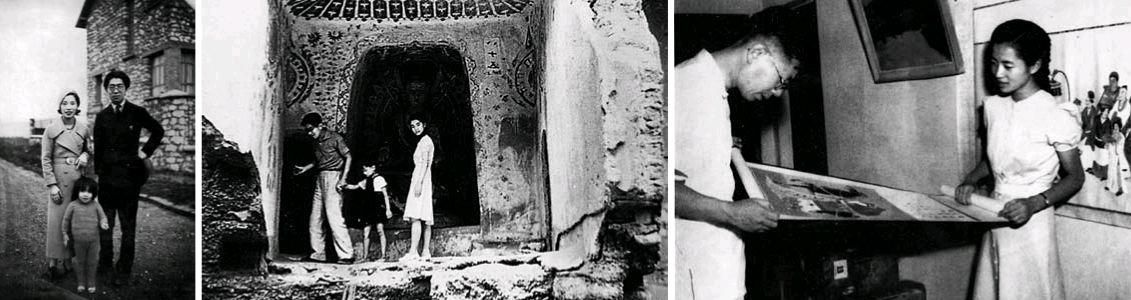
Shortly after she returned, her father held a Dunhuang Cultural Relics Exhibition at the gate tower of the Meridian Gate of the Forbidden City. Liang Sicheng and his wife, Lin Huiyin, two renowned architects of modern China, were active supporters of Changs work in Dunhuang. Since they were attending the exhibition, Chang asked Shana to accompany the couple.
During the exhibition, the couple and the girl talked a lot. She told them her childhood experience in Dunhuang copying scriptures and murals and the couple asked about her studies in the U.S. Later, the couple told her father that they wondered whether the girl was interested in working for the wife Lin Huiyin using her expertise in Dunhuang patterns. Thus, without any formal academic certification, Chang Shana was hired as a teaching assistant by the Architecture Department of Tsinghua University, which opened the world of artistic design and education to her.
In 1953, according to national plans, all teachers of social science and art at Tsinghua Universitys Architecture Department were transferred to the Department of Applied Art, Central Academy of Fine Arts. Three years later, the department was elevated to the Central Academy of Craft Art, becoming the top university for Chinese craft and design.
In the late 1950s, Chang, as a young teacher, participated in creating architectural decoration designs for ten great buildings in Beijing dedicated to the 10th birthday of the Peoples Republic of China. For example, for the ceiling of the banquet hall in the Great Hall of the People, Chang took inspiration from ceiling patterns of Dunhuangs murals and designed floral patterned lights in Tang Dynasty (618-907) style. Her design won recognition from both experts and top leaders. In an era sated with passion, Chang worked day and night, both in offices and at construction sites, and matured quickly.
Cultural Conduit
Along the road to artistic pursuit, Chang was exceptionally lucky. However, in terms of her personal life, she endured considerable suffering and misfortune.
At 22, she married her first husband, but divorced very soon. Ten years later, she married again to translator Cui Taishan and they both agreed on “three rules” for their marriage: She would not give birth to a child, she would not cook, and both of them would remain fully devoted to their respective work. Just as Chang finally began to feel satisfied with married life, the “cultural revolution”(1966-1976) broke out. Due to her background of being born in France and studying in the U.S., she was often criticized in public. Without much hope for her career left, Chang decided to have a child. However, because of fear and fatigue, she miscarried twice.
Still, art comforted her most. In 1971, when the political at- mosphere began to calm, Chang, who was then working on a farm in Hebei Province, finally became able to pick up brushes again to paint flowers, her favorite subject. She painted flowers of peanut and potatoes, and many others. During the final years of the “cultural revolution”, she returned to Beijing and became a mother at the age of 45.
In 1982, Chang was promoted to vice president of the Central Academy of Craft Art. A year later, she became president and held the post for 15 years.
No matter how busy she was, Chang continued to fuel her passion for art. As president, she still offered her own courses to students and participated in design programs. After retiring, she remained busy, with most of her work related to Dunhuang. Leading a group of students, she compiled and published the book Dunhuang Decorative Patterns from Different Eras. In 2014, an exhibition on this theme was held in both Beijing and Dunhuang, with plans for future showings in Taiwan and overseas.
“Every achievement of my life – whether in painting, pattern education, or design – is closely related to Dunhuang,” she insists.“An amazing artistic treasure chest, today Dunhuang is not very‘healthy in a sense, with the colors of some murals and painted sculptures fading. We can still try our best to prolong its life. I believe we should conduct deeper research of Dunhuang and infuse its legacy into modern art.”