Navigating Time Silk Road Yesterday and Today
2014-09-11 17:38:02byYouShanshan
China Pictorial 2014年8期
by+You+Shanshan
As soon as I completed my last article, I couldnt help but refresh my memories of the previous 20 days highlighted by the night view of the Tang-Dynasty(618-907) West Market in Xian optimized by the Imperial City Renewal Project, caravans on the Gobi desert at Zhangye, murals in the Dunhuang Grottoes, old Kazakh men at the bazaar in Horgos, spirited businesswomen in Almaty, sparkling eyes of children in Samarkand, and the picturesque Strait of Bosporus in Istanbul.
All these places were the highlights of the ancient Silk Road, and today residents along the way can expect improving lifestyles thanks to the construction of the Silk Road Economic Belt.
Starting Point
Looking back at the history of the Silk Road, Xian, the provincial seat of Shaanxi, is an indispensable hub of the thoroughfare.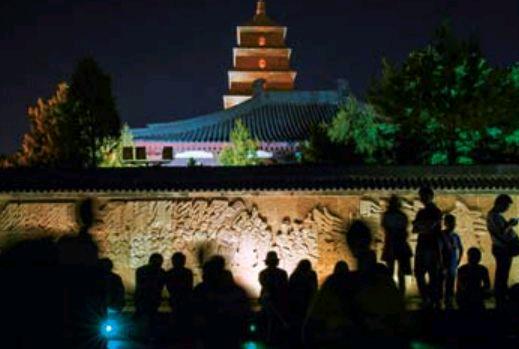
The glory of yesteryear can still be found in Xian, especially at night, when a cool breeze stirs summer at the busy Tang-Dynasty West Market, lined with bars, restaurants and pubs characterized by a strong flavor of the “Western Regions,” a historical name for the area primarily covering todays Xinjiang and central and western Asia. Various music from India, Central Asia and Turkey lingers in the air. Restaurants serve authentic dishes. Shops offer a wide range of commodities with characteristics of the “Western Regions.”
As a matter of fact, the Market was built at the very site of the West Market of the Tang Dynasty. Changan, then Chinas capital with a population of about one million, was the largest and most bustling international metropolis in the world and the West Market the largest business center on the planet at the time, attracting myriad foreign and domestic merchants. It was there that goods from every corner of the country converged to be distributed all over the world via the ancient Silk Road. The West Market served as the literal starting point of the commercial thoroughfare.
The thriving West Market witnessed the zenith of the ancient Silk Road. Today, Xian is ready to play a central role in the construction of the Silk Road Economic Belt, remarked Lou Qinjian, governor of Shaanxi. “Xian was the starting point of the ancient Silk Road,” he notes. “Now we are going to give the city brandnew connotations with the Silk Road Economic Belt – the first choice for industrial transfer in the East, and even the globe – an inland transportation hub bisecting the Eurasian Continental Bridge and linked to the Maritime Silk Road. It remains the largest logistics center along the Silk Road Economic Belt and an important platform for diverse Asian and European cultures.”
The governor is so confident because he knows of Xians advantages: Seventeen national expressways pass through the city, which is one of eight transportation hubs for rail and air transport and launched and hosted the First China International Fair of the Silk Road Economic Belt in 2014, drawing more than 300 exhibitors from 60 countries. Moreover, it has maintained cooperation with a number of colleges and universities in Central Asia, training 1,000 students from these countries every year.
Trading Villages
Xinjiang was a crucial stop for foreign merchants visiting China via the ancient Silk Road.
I chose a simple route through Xinjiang. I headed towards the Ili River Valley at the western tip – dubbed the “Regions South of the Yangtze River beyond the Great Wall” for its abundant, beautiful pastures. Then, I continued and explored more along a fascinating route: Horgos is the largest port in northwestern China, near Mt. Tianshan is a breathtaking fruit valley, nomadic herders maintain their traditional lifestyles along Sayram Lake, and in Bortala Mongol Autonomous Prefecture I witnessed busy rail cargo transport between China and Central Asia through Alataw Pass port, which endures heavy winds (force 7 or 8) all year.
The route I chose partially coincides with the ancient Silk Road in Xinjiang, which also links the ports that will play an important part in the reconstruction of the Silk Road.
My biggest worry before setting off was my safety in Xinjiang, which turned out to be no problem wherever I went. Everyone I encountered, including old Uygur men driving carts to the business center in Yining, Kazakh boys herding on the grassland, Han women farming lavender in the fields, and businessmen in Horgos, were all working hard towards a single end: improving their and their families lives – the simple truth.
Regardless of changes around the world, the primary concerns of the majority of laborers were things like the output of cotton and tomatoes, breeding of their sheep, and their daily “sales volume.”
It goes without saying that the construction of the Silk Road Economic Belt will benefit the people of Xinjiang.
Horgos along the border of China and Kazakhstan, for instance, is Chinas first National Grade A highway port, which opened to the West in 1881. During the 1980s and 90s, Horgos was made up of only a handful of households who engaged in smallscale frontier trade. Today, however, a massive volume of commodities pass along highways and rails. In the past, Horgos had only one single road and no high-rises at all, but today, it can be identified by a brand-new look.
Horgos Port has been enhanced by the China-Kazakhstan Horgos International Border Cooperation Center, the only transnational border trade cooperation organization in China. The trade zone, covering 3.43 square kilometers of Chinese territory and 1.85 square kilometers of Kazakhstan, enjoys multiple privileges domestically and internationally.
Nijiati, a local Uygur, sells daily necessities in the trade zone on the Chinese side. He was serving Kazakh customers when I dropped by his store.“Business is good,” he smiled.“Its the best season for business in Horgos. I can make tens of thousands of yuan a day.”
People seldom see merchants carrying goods on their backs. Those beyond “primary accumulation” opt to run bigger business and trade on the Central Asian and European markets by directly transporting goods in contracted containers. Zhu Weilai from Jiangsu Province, for example, specializes in wholesaling large quantities of textiles. “Its easy to do business here,” grinned Zhu, “maybe because of the good traditions of the Silk Road.”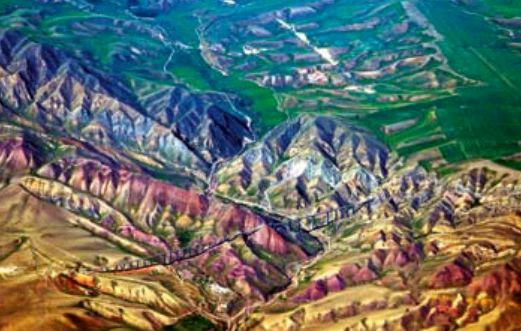
A Cross-Border Chinese Businesswoman
Its a five-hour drive between Horgos Port in China and Almaty, Kazakhstan.
At 10 a.m., Huang Jie, a Chinese operator of a kitchenware store over 2,000 square meters in area, haggled with a wholesaler in Almaty. It didnt take long for them to agree on a deal.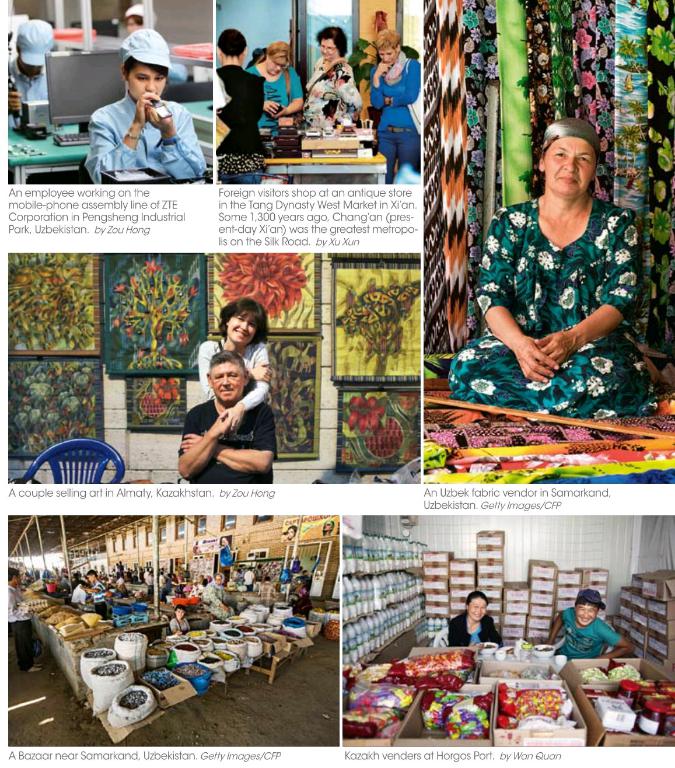
Huang Jie began doing business in Kazakhstan nearly 20 years ago. She was once a member of the Xinjiang Skating Team, during which time she received training in Kazakhstan for two years.“The local people are very friendly to the Chinese,” noted Huang.“I seized my business opportunity when the Soviet Union fell, seeing that light industrial products sold well due to the shortage of goods and materials.” Her business has grown over the past two decades; today, her supermarket takes in revenues of 300,000 to 400,000 yuan daily.
“All of my goods are from China,” she adds. “And almost everything on this market comes from Yiwu. Many people come to me for wholesaling. Every year I visit Yiwu at least once.”
Yiwu, in Zhejiang Province, is considered the worlds largest distribution center for small commodities. It usually takes two days for Huang Jie to transport her goods from Yiwu across highways to the ports of Horgos or Alashankou.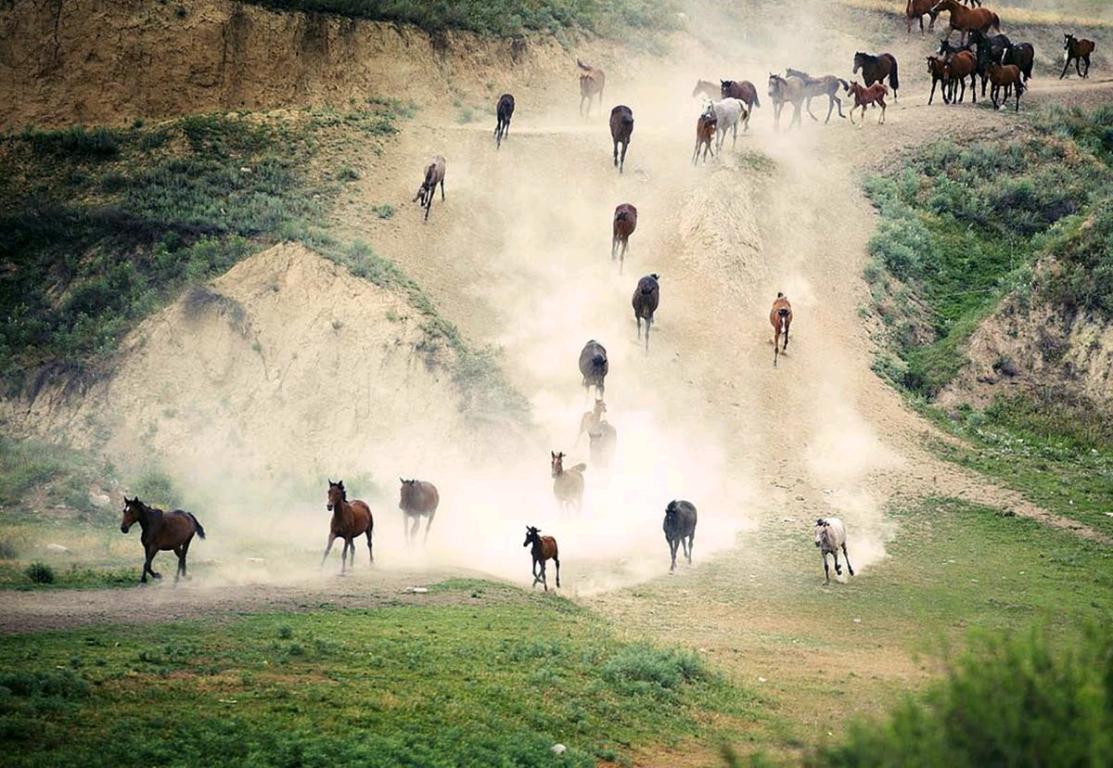
An exciting development arrived on January 20, 2014, when China launched a special international container train between Yiwu and five countries in Central Asia, which delivers goods directly to Almaty via the Alashankou Port in Xinjiang, and then distributes them to other countries, such as Kirghizstan, Turkmenistan and Tajikistan. In the near future, Yiwu products will be transported directly to Europe through Turkey.
“Products made in China are inexpensive and fine,” remarks Huang, “Quality is above average. Thats why were seeing extremely strong demand – one container a day, or two to three containers a week. The transportation of goods has accelerated thanks to the opening of the special international container train and simplified customs clearance.”
In fact, Huang follows the exact route merchants used more than 2,000 years ago, and the biggest difference between her and her counterparts of antiquity is transportation mode: Caravans have been replaced with modern vehicles and rails.
Modern transportation has certainly made things convenient: An HP laptop made in Chongqing HP Industrial Park in southwestern China can be delivered to a customer in Germany in just a few days by the special train. Pieces of a heavy-duty truck made by Shaanxi Auto can be assembled in Almaty and then transported to Russia or Europe on the special train or another international highway transit corridor linking western China to Europe across five states in Kazakhstan. The new Silk Road is boosting trade at an unprecedented pace.
Chinese Industrial Park in Uzbekistan
Light industrial products are not the only Chinese-made products found on the Silk Road.
In 2010, Huawei Technologies Co. Ltd., the worlds largest telecommunications equipment manufacturer, helped its subsidiary in Tashkent, Uzbekistan, with 4G communications. With its representative office established in 1999 and subsidiary in 2005, Huawei has become the biggest supplier of telecommunications equipment in Uzbekistan.
China Railway Construction Corporation Limited (CRCC) has also made contributions to the development of countries along the Silk Road. On January 17, 2014, the second phase of the high speed railway between Ankara and Istanbul was completed. Stretching 158 kilometers with a contract value of US$1.27 billion, it is the first overseas high-speed railway built by a Chinese enterprise.
As planned, some Chinese enterprises have relocated to countries along the Silk Road Economic Belt.
It takes three hours to drive between Tashkent and Pengsheng Industrial Park in Syr Darya State. Founded in 2009, Pengsheng is run by Jinsheng Trading Company, a private enterprise based in Wenzhou, Zhejiang Province. Specializing in producing tiles, shoes, and cell phones, it turned out US$56 million in gross output value and paid over US$5 million taxes to the Uzbek government in 2013.
“The local government has offered great support to our business,” illustrated Wang Xinghe, general manager of Pengsheng Industrial Park. “The land was cheap and we enjoy eight exemptions, such as property, added value and customs.”
Today, semi-finished raw materials from Pengsheng are exported to China, while intensively-processed products are exported to Japan and European countries. Adjacent to the industrial park is a special railway to Central Asia, delivering goods from Pengsheng to China and Europe.
Even more “Made in China” goods will flow through the artery of the Silk Road in the near future, feeding demands of countries along the way and bringing greater technology and capital from China.
Opportunities for the Ordinary
Pengsheng has created many jobs for local Uzbeks. Arslan is a young man from Turkmenistan I bumped into at a trade talk for cooperation and investment between Chinas east and west. He has been fortunate to study petroleum engineering at Xian Shiyou (petroleum) University. His mother works for a PetroChina subsidiary in Turkmenistan. According to its regulations, children of the companys employees enjoy free higher education in China. “I can find a job in my mothers company after graduation!” he exclaimed.
For Kazakh May Zebatskaya Ella, learning Chinese means better job opportunities. “My father used to work in China,” she explained. “He loves the country so much. During his stay there, he believed that China would soon boom. So he encouraged me to learn Chinese for better opportunities.”
Her fathers prediction proved wise. Statistics from the Chinese embassy in Kazakhstan show that China has become the biggest trade partner of the country. Last year, for instance, bilateral value of trade topped US$28.6 billion.
“Many Chinese companies come here to do business,”May continued. “I believe that more companies in China will be drawn to my country especially after the visit from Chinese President Xi Jinping when he announced the idea of building the Silk Road Economic Belt, which should create even more job opportunities for us Chinese learners. Ive applied to PetroChina for a translator position after I graduate this year.”
The tutor at the cultural center where she studies agrees. “Chinese learners are finding a wide array of choices because many Chinese companies have established factories here, China and our country have seen increasing trade, and learners have the option of working or continuing their studies in China.”
During my visit to the Confucius Institute at Eurasia National University (Kazakhstan), I met a student, Aynur, who conversed with me in fluent Chinese. “I assumed that the Silk Road was distant history, but eventually realized it was actually very close: It provides us the opportunity to learn Chinese, which means opportunities not only to go to China, but to get a good job here. I think its a win-win.”