
Zhao Zhankun:The Silver Spoon
2014-06-27 05:30:09byLiXia
China Pictorial 2014年5期
by+Li+Xia
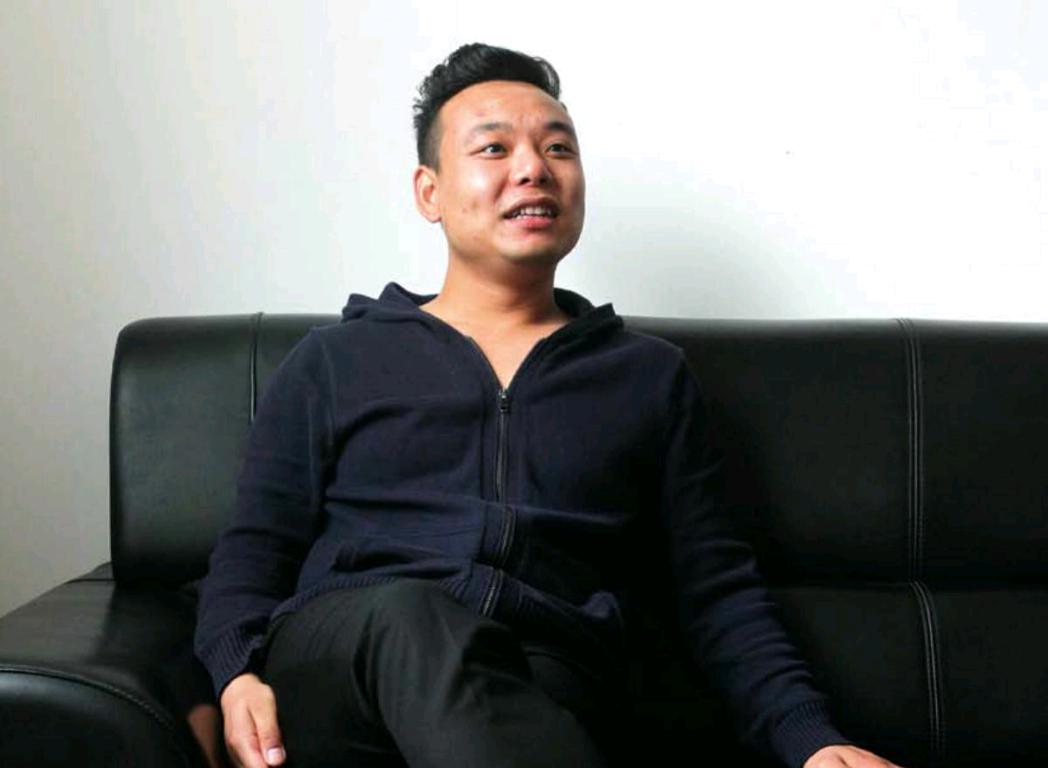
“Im always thinking about my fathers allegory of bus riding,” remarks Zhao Zhankun. “Those who arrive at the bus stop early will get seats. Those who arrive on time wont get a seat, but can stand. And those who arrive late miss the bus, leaving them chasing it and sighing. The sitters can read, the standers must endure the wait, and the rest can only complain and curse. Why not arrive earlier?”
“Many people complain about conditions today,” continues Zhao, “But they seem to know nothing about how things got this way. One person cant change the world – only adapt – and be better, or he will be out of the game eventually.”
Connections
Zhao Zhankun was born in humble circumstances in a small township in Hebei Province. The Zhao family could barely afford spending 2.6 yuan on the newborn: half for milk powder and the rest for delivery and birth certificate. There was no blanket. The infant was wrapped with his aunts used long johns before being sent home.
In 1988, a decade after China implemented economic reform and opened its door to the outside world, a college graduates monthly salary averaged only 56 yuan.
Like many farmers of the 80s, the babys father was smart, bold, and had amassed good contacts. The father utilized every opportunity offered by the government, exploring each possible avenue to prosperity. First, he operated a small shop selling electric watches he could get cheap in southern China. Then, he opened a timber mill.
It didnt take long to grab his first windfall because it was easy to get bank loans due to his connections and governmental policy. When the central government began restructuring state-owned enterprises that were hemorrhaging money, the father purchased a copper mine in Laiyuan County of Hebei Province, which earned him praise and trust from the local government for all his job creation.
His heart leaped with joy. He didnt have to worry much about his staff because they were all already well trained and highly experienced. The business would later expand and become Sanyi Industrial Co., and the father an entrepreneurial celebrity. The boss moved his entire family to the capital.
Zhao Zhankun was fortunate enough to attend college in the United States thanks to his fathers financial support and wide, solid connections. In Beijing, not only were the fees for transplants to attend high school extremely high, but parents also needed connections to the schools administrators.
At high school, Zhao Zhankun always kept his head down: Only a few friends were aware of his family background. At the same time, he managed to keep his chin up when his classmates mocked him for his rural roots. “They knew nothing about the world,” he growls.
After failing to gain admission to Chinas most prestigious insti- tutes of higher learning such as Peking and Tsinghua Universities, he chose enroll at East China Institute of Technology in Jiangxi Province, 1,400 kilometers from Beijing. Three months before classes started, his father sent him to a remote area of the Xinjiang Uygur Autonomous Region for military training through the connection of a friend, in hopes of building a physically and mentally strong son –one sturdy enough to shoulder future family burdens.
Rising from obscurity to become a figurehead across sectors of media, logistics, mining, and agriculture, the senior Zhao set a good example for his son. “He is loyal to his friends and willing to absorb losses,” the younger Zhao remarks. These qualities are fundamental in enhancing ones potential connections, which are more powerful than money.
The son inherited many of his fathers most valuable qualities, and found no trouble making friends. He was na?ve while in high school. At first, he made friends with people he liked. As he matured, he learned to seek out friendship from those he admired.
“Optimally utilize everything and everybody,” he advises. “One must make friends from all walks of life because youll never know when theyll be helpful.” He spent most of his money, 200-300 yuan a week, entertaining his friends with food. “After graduation, everyone remembered me as a friend,” he grinned.
Last year, some of his former classmates came to Beijing in hopes of being admitted to a postgraduate program at China University of Geosciences. He invited every one of them out. “You never know who will become rich or powerful,” he explains. “You cant replicate the feeling of sharing BBQ on the street for pennies even if you spend thousands on dinner at a 5-star restaurant.”
During his studies in the United States, he cooked for classmates. In China, relationships are vital, and the best way to build them is to invite people to dinner.
“My dad often reminds me of the lucky loser,” says Zhankun.“Nowadays, few are willing to take a beating. Im one. Thats why I always jump to pay the bill.” He knows that hes planting the seed for potential future help from a valuable friend. Such a savvy social principle is considered by Confucius to indicate integrity and wisdom, according to Analects.
In 2012, Zhankun headed to the United States to attend University of North Carolina and then transferred to Arizona State University. Prior to departure, his father had him attend lectures on traditional Chinese culture at Peking University, hoping that his son would share the knowledge with his American peers so they could better understand each other. “Such education could end up being the most valuable in the U.S.,” he admits.
The father was right. With a heavy accent, the son preached to American classmates from the English edition of General History of Chinese Philosophy by Chinese master philosopher Feng Youlan. He even coached table tennis. “Helping others is a good way to make friends,” he declares. “Im weak at basketball, but strong at table tennis.” The boy quickly learned how to interact with people using concepts of traditional Chinese philosophy.
He taught Chinese to four American middle school students and charged $120 per class, twice a week. “I earned bread while learning English,” he smiles. He acquired a teaching license during his spare time at college before leaving for the United States, and it came in handy.
As his old man hoped, Zhankun prepared for his responsibility to the family business with each step he took.
Responsibility
In China of the 1980s and 90s, it was common to see many failed marriages amongst successful entrepreneurs, and Zhao was one of them. At that time, his son was five.
Since the founding of New China in 1949, the country has seen several ups and downs in divorce statistics.
The first wave was in the 1950s when new men came to power after years of revolutionary fights, and lost contact with their families from arranged marriages in their hometowns. The central government issued a new marriage law, allowing many revolutionaries to divorce and wed women in metropolises.
The second divorce boom hit the country in the late 1970s and early 80s soon after the “cultural revolution” (1966-1976) period, during which some officials and intellectuals were exiled to the countryside. Joining them were educated youth who worked in rural areas and entered universities after returning to cities. They left their families back in the countryside and married the best match they found in the new environment.
The third wave occurred during the late 1980s and 90s when the first wealthy businessmen emerged. Many abandoned their wives who stood by their sides during the tumultuous journey to prosperity in favor of younger women.
Both of Zhankuns parents remarried, bringing him two stepbrothers and a sister.
According to Chinese tradition, the eldest son is obliged to inherit the family business and educate his siblings. Zhankun adhered to this tradition like so many others. All his siblings were born in the 1990s when the families had already escaped poverty. They had no idea about the hardships of the past. Enduring a penniless childhood, Zhankun was more fit to helm the family vessel.
He is proud of his fathers vision, which changed with the times as the man remained hungry and curious. These qualities can be seen in his work and hobbies. Born in 1966, the elder Zhao devoted his spare time to golf, skiing, and photography. “My dad has never gone to a decent school but became a successful businessman,” the boy remarks proudly. “He seized every opportunity and stayed good to his friends.”
Zhao Zhankun longs to preserve and improve his family business and take good care of his siblings, hoping to pay back his good fortune as well as he can. “My dad set a good example. He made money mining and used it to help villagers grow vegetables for urbanites. Farmers got income and city dwellers got green vegetables. He worked conscientiously and was paid for his efforts.”
“I was lucky to be born when our country was experiencing a transformation socially and economically,” opines Zhao Zhankun.“Social transformations always create opportunities. Now, we can get huge amounts of information through various means. Information makes things happen. Before, we had ideas but no money. Now money is not a problem. We can get things done if we work hard enough.”
One of his friends founded a franchise by polishing shoes on the streets of Chengdu, the provincial seat of Sichuan. “Small things can open doors to big markets,” Zhankun notes. He has seen his fathers friends give up foreign citizenship in countries such as the U.S. and France to return to China for business.
“Im proud to be Chinese. I was born at the right time.”
Two weeks before this interview, Zhao Zhankun secured a job at a state-owned enterprise that ranks fourth globally in its industry. He can thank his family connections for such a position. In some cases, one can still get a comfortable seat on the bus without arriving the earliest.
Like many young people, Zhao Zhankun enjoys working for a state-owned enterprise in a well-paid position, but most likes the complicated relationships the environment creates. “Its like a small society. You wont have future problems if you can survive here. You have to get used to things in China. I think of my company as a river and society as a sea. Ill have plenty of room to play once I manage the relationships with my co-workers, boss, friends, and rivals.”
