
Warm Needling Combined with Iontophoresis of Chinese Medicine for Temporomandibular Joint Disorder
2014-06-24 14:43:12
Department of Acupuncture and Moxibustion, Taihe Hospital, Hubei University of Medicine, Shiyan 442000, China
CLINICAL STUDY
Warm Needling Combined with Iontophoresis of Chinese Medicine for Temporomandibular Joint Disorder
Liu Min-juan, Mu Jing-ping
Department of Acupuncture and Moxibustion, Taihe Hospital, Hubei University of Medicine, Shiyan 442000, China
Author:Liu Min-juan, associate chief technician
Objective: To observe the clinical efficacy of warm needling combined with iontophoresis of Chinese medicine for temporomandibular joint disorder (TMD).
Methods: A total of 100 TMD cases were randomly allocated into a treatment group and a control group, 50 in each group. Cases in the treatment group were treated with warm needling combined with iontophoresis of Chinese medicine, whereas cases in the control group were treated with Western medication. The therapeutic efficacies in two groups were assessed after three courses of treatment.
Results: The recovery rate and total effective rate were 54.0% and 98.0% respectively in the treatment group, versus 30.0% and 82.0% in the control group, showing significant differences (bothP<0.05). The recovery rates in the treatment group were higher than those in the control group respectively after 1, 2 and 3 courses of treatment, indicating that warm needling combined iontophoresis of Chinese medicine could substantially shorten the course of treatment.
Conclusion: Warm needling combined with iontophoresis of Chinese medicine is remarkably effective for TMD and deserves further clinical application.
Acupuncture Therapy; Moxibustion Therapy; Warm Needling Therapy; Iontophoresis; Temporomandibular Joint Disorder
Temporomandibular joint disorder (TMD), also known as temporomandibular arthritis, is a common problem affecting the jaw and surrounding facial muscles that control chewing and moving the jaw. This condition is clinically characterized by jaw pain, a popping sound heard in the joint when the jaw is opened and closed, and limited ability to open the mouth[1]. In severe cases, patients may have difficulty eating or speaking. TMD is often seen in young and middle-aged population, more women than men. Contributing factors include stress, worry, fatigue, overload of the joint, cold stimulation and trauma. Because the temporomandibular joint combines a hinge action with sliding motions, TMD often lasts a long period of time and is difficult to manage[2]. Actually, TMD includes a set of clinical symptoms and conditions with unidentified causes, such as hyperfunction of the external pterygoid muscle, spasm of the external pterygoid muscle, loosening and flaccidity of joint capsule and ligaments, partial displacement, herniation, perforation or rupture of the articular disc and condyle[3]. At present, this condition is often treated with medication or surgery. However,these treatments are not very helpful. In recent years we’ve treated TMD patients by warm needling combined with iontophoresis. The results are now summarized as follows.
1 Clinical Materials
1.1 Diagnostic criteria
This was based on the diagnostic criteria in theOral and Maxillofacial Surgery[4]. Patients with two or more of the following symptoms can be diagnosed as TMD: pain in and around the temporomandibular joint, a popping sound in the joint, limited ability to open the mouth and difficulty opening the mouth; associated symptoms may include pain radiating to the surrounding muscles and a clicking noise heard in the joint; widened, narrowed or absent A-P joint space by dental X-rays; and absence of structural lesions.
1.2 Inclusion criteria
Those who met the diagnostic criteria for TMD; having not taken medication for TMD in the recent week and having not received any treatment since the initial onset; aged between 15 and 60 years; signed the informed consent and could follow the treatment protocol.
1.3 Exclusion criteria
Those who failed to meet the diagnostic and inclusion criteria; having complications of primary life-threatening conditions involving the cardiocerebro-vascular, liver, kidney and hemopoietic systems; TMD due to rheumatoid arthritis of the temporomandibular joint, osteoarthropathy, tumor of the temporomandibular joint or orthodontics; having been treated by other medications or therapies that may interfere with the treatment effect.
1.4 Statistical method
The SPSS 19.0 version software was used for statistical management. The measurement data were expressed byThet-test was used for intra-group comparison, analysis of variance for inter-group comparison. APvalue of less than 0.05 indicates a statistical significance.
1.5 General data
A total of 100 TMD outpatients in Acupuncture and Stomatology Departments were randomly allocated into a treatment group and a control group by the random number table[5], 50 in each group. Cases in the treatment group were treated with warm needling combined with iontophoresis of Chinese medicine, whereas cases in the control group were treated with Western medication. There were no between-group significant differences in gender, age and duration (allP>0.05), indicating that the two groups were comparable (Table 1).
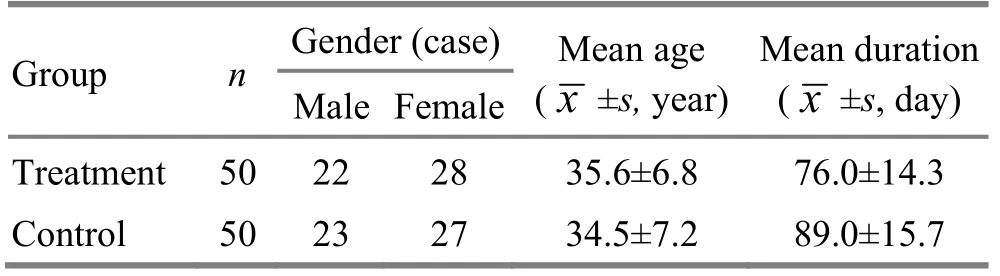
Table 1. Between-group comparison of general data
2 Treatment Methods
2.1 Treatment group
2.1.1 Electroacupuncture
Points: Ash point (tenderness point in the temporomandibular joint), Shangguan (GB 3), Xiaguan (ST 7), Lieque (LU 7), Tinggong (SI 19), Qianzheng (EX-HN 16), Tinghui (GB 2) and Yifeng (TE 17).
Method: Totally 4-6 points were selected for each treatment. With a sitting or supine position of the patient, upon routine sterilization, punctured the selected points (0.5-1.0 cun) perpendicularly using disposable filiform needles of 0.3 mm in diameter and 30 mm in length and conducted reducing manipulation by strong stimulation. At the same time, asked the patient to open and close the mouth slowly for 5 min. Then followed this with moxibustion (warm needling): place the ignited 2 cm moxa stick to the needle handle until the local skin becomes red.
2.1.2 Iontophoresis of Chinese medicine
Main ingredients:San Qi(Radix Notoginseng) 50 g, 30 g ofYan Hu Suo(Rhizoma Corydalis),Bai Jie Zi(Semen Sinapis Albae),Ding Xiang(Flos Syzygii Aromatici) andRou Gui(Cortex Cinnamomi), 20 g ofRu Xiang(Olibanum),Mo Yao (Myrrha),Chuan Shan Jia(Squama Manitis),Fang Feng(Radix Saposhnikoviae) andDu Huo(Radix Angelicae Pubescentis), and 15 g ofHua Jiao(Fructus Zanthoxyli),Xi Xin(Herba Asari) andGan Sui(Radix Kansui).
Method: Soaked the above herbs in water for 30 min. Then decocted, extracted the juice and soaked the cotton pad into the medicinal juice. With a sitting or prone position of the patient, placed the soaked cotton pad to the negative and positive electrodes of the NPD-4AS treatment apparatus (over the affected area) manufactured by Nanjing Paoyuan Electronic Technology Research Institute, using 20 mA of electric current. Each treatment lasted 20 min.
2.2 Control group
Patients took 25 mg of Indomethacin (to regulate the muscle and nerve) for each dose, 3 times a day; 10 mg of Vitamin B1for each dose, 3 times a day; and 25 mg of Diazepam tablet once a day before going tobed in case of mental stress, 6 d made up a course of treatment.
2.3 Course of treatment
The above treatment was done once a day, 6 d constituted a course of treatment. There was a 1-day interval between two courses of treatment. Therapeutic efficacy was evaluated after each course of treatment. Patients who were evaluated as recovery would discontinue the treatment, while the rest of the patients continued with next course of treatment. Statistical data analysis was conducted after 3 courses of treatment.
During the treatment, the patients were asked to apply hot compress to the affected temporomandibular joint, avoid wide mouth opening, eat soft food and stay away from chewing hard food.
3 Therapeutic Efficacy Observation
3.1 Criteria for therapeutic efficacy
This was based on theCriteria of Diagnosis and Therapeutic Effects of Diseases and Syndromes in Traditional Chinese Medicine[6].
Recovery: Absence of symptoms including pain and distension in the jaw, limited ability to open and close the mouth, a popping sound in the joint and difficulty chewing food, normal functional activity of the temporomandibular joint and no tenderness or distending pain in the joint and surrounding area.
Marked effect: Almost absence of symptoms, no tenderness or distending pain in the temporomandibular joint and surrounding area, almost normal ability to open the mouth, coupled with occasional mild popping sound in the joint.
Improvement: Alleviated pain in opening the mouth and chewing food, improved chewing ability, no tenderness in the joint and surrounding area and alleviated distending pain.
Failure: The signs and symptoms remain unchanged after treatment.
3.2 Treatment results
3.2.1 Between-group comparison of clinical efficacy
The total effective rate and recovery rate in the treatment group were 98.0% and 54.0% respectively, versus 82.0% and 30.0% in the control group, showing significance differences (bothP<0.05). This indicates that the total effective rate and recovery rate in the treatment group were superior to those in the control group, and warm needling combined with iontophoresis of Chinese medicine can improve the clinical efficacy of TMD (Table 2).

Table 2. Between-group comparison of clinical efficacy (case)
3.2.2 Inter-group comparison on relationship between treatment course and treatment effect
It can be seen from Table 3 that 12 cases in the treatment group recovered after the 1st course of treatment, 9 cases after the 2nd course of treatment and another 6 cases after the 3rd course of treatment, versus 3 cases in the control group recovered after the 1st course of treatment, 6 cases after the 2nd course of treatment and another 6 cases after the 3rd course of treatment, showing a statistical significance (P<0.05). This indicates that warm needling combined with iontophoresis of Chinese medicine could greatly shorten the treatment time of TMD (Table 3).
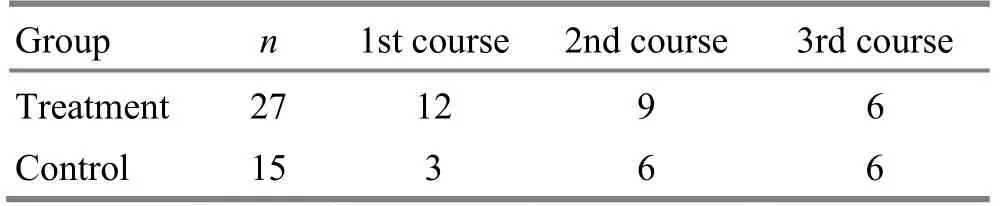
Table 3. Inter-group comparison on relationship between treatment course and treatment effect (case)
4 Discussion
TMD is quite common and listed by the WHO as the 4th epidemic disease of the oral cavity[7]. In Chinese medicine, this condition falls under the category of ‘convulsions’, ‘locked jaw’ or‘Bi-impediment syndrome’. Its contributing factors include emotional disturbance, improper diet or chewing habit, trauma or joint arthritis. These factors can result in stagnation of qi and blood, blockage of meridians, malnourishment of muscles/tendons, further leading to pain, soreness and distension in the jaw, a popping jaw and limited mouth opening. In modern medicine, TMD occurs as a result of disturbance in neuro-regulation of masticatory muscles, occlusal joint disorder, injury to the jaw, and asymmetrical joint development. At present, there are three recognized etiological factors: occlusal relationship, neuro-mental and neuromuscular theory[8]. According to the principle of ‘treating symptoms in an acute stage and treating the rootcause in a remissive stage’, the treatment principle of this condition is to alleviate pain and symptoms in acute attacks and regulate qi and blood, balance yin and yang, restore healthy qi and help to move joints during a remissive stage.
Acupuncture can alleviate pain and increase the pain threshold[9-10]through activating meridian qi, regulating meridians, harmonizing qi and blood and balancing yin and yang. Since this condition is located in the face where three yang meridians of both hands and feet converge, points of these meridians were selected, such as Xiaguan (ST 7), Shangguan (GB 3), Yifeng (TE 17), and Tinggong (SI 19). These yang meridian points can be used to remove wind, unblock meridians, circulate blood, alleviate pain and lubricate joints. Lieque (LU 7), a Luo-Connecting point of the Lung Meridian, connecting with the Large Intestine Meridian, is a key point for problems of the mouth and face. Clinical observation and laboratory studies have proven[11-12]that acupuncture can boost the release of endogenous opioid peptides, increase the threshold of pain or pain tolerance and thus temporarily alleviate pain. In addition, acupuncture can circulate blood, relieve local muscle spasm, release temporomandibular joint adhesion, improve functional activities and restore structures of the ligaments, joint capsules and condyle and thus eliminate inflammation. What’s more, acupuncture can activate healthy qi, regulate meridians, harmonize qi and blood, nourish facial muscles and therefore restore normal activities of the facial muscles on the affected side[13].
Moxibustion can warm and unblock meridians, dissipate cold, activate yang qi, resolve dampness, and supplement qi. Warm needling therapy integrates acupuncture with moxibustion and can warm the affected area, regulate the body temperature and plasma osmotic pressure over the affected area[14], dilate the local capillaries, and speed up local blood and lymph circulation as well as absorption, transfer and discharge of inflammatory exudate, especially pain-producing substances and therefore enhance the pain-relief effect[15]. Its action mechanism may be associated with thermal effect, radiation effect of light and medicinal property, burnt product and smoke of mugwort[16].
As a non-invasive external therapy, iontophoresis of Chinese medicine has double treatment effect of Chinese medical ion and direct current. The direct current can stimulate nerve reflex, increase the release of histamine and vasoactive amines, dilate local blood vessels, increase the blood flow and thus improve blood circulation of local soft tissue. In addition, it can increase the permeability of capillaries, speed up lymphatic return and thus alleviate local inflammatory reaction[17]. With direct current, an ‘ion cluster’ of Chinese medicine can be formed in the affected area, which can enter the focus through the skin and sweat gland, then slowly into the blood and body. Compared with oral administration, this can avoid the first pass effect in the liver, prevent degradation by digestive fluid and minimize adverse reactions.
In summary, warm needling combined with iontophoresis of Chinese medicine can increase local metabolism, speed up local blood and lymphatic circulation as well as regeneration of peripheral nerves, reduce nerve excitability and obtain substantially better effect than medication alone. Therefore it deserves further clinical application.
We’ve also noticed that the therapeutic efficacy is closely associated with its duration: the shorter the duration, the better the therapeutic efficacy. As a result, it’s important to educate patients to get treatment as early as possible. In addition, it’s also important to educate the patient to have correct chewing habit, stay away from hard food, avoid cold stimulation and joint injury from too wide mouth opening and prevent relapse of TMD.
Conflict of Interest
The authors declared that there was no potential conflict of interest.
Acknowledgments
This work was supported by Taihe Hospital, Hubei University of Medicine.
Statement of Informed Consent
All of the patients in the study signed the informed consent.
[1] Ma XC, Kang ZC. Terminology, diagnostic classification and treatment principle of temporomandibular disorders. Zhonghua Kouqiang Yixue Zazhi, 2002, 37(4): 241-243.
[2] Yang ZM, Zhu JK, Wang W. Reconstructive Surgery. Beijing: People’s Medical Publishing House, 2001: 252-253.
[3] Xie LX. Guidelines for Diagnosis and Treatment. 2nd Edition. Beijing: People’s Medical Publishing House, 1997: 1439-1441.
[4] Qiu WL. Oral and Maxillofacial Surgery. Beijing: People’s Medical Publishing House, 2001: 38.
[5] Liu H, Huang XZ. Therapeutic effect of temporomandibular disorder by injection at acupoints (report of 80 cases). Fujian Yike Daxue Xuebao, 2005, 39(4): 395-396.
[6] State Administration of Traditional Chinese Medicine. Criteria of Diagnosis and Therapeutic Effects of Diseases and Syndromes in Traditional Chinese Medicine. Nanjing: Nanjing University Press, 1994: 51-52.
[7] Fu KZ, Ma XC, Zhang ZK, Tian YH, Zhou YH, Zhao YP. Studyon the use of temporomandibular joint dysfunction index in temporomandibular disorders. Zhonghua Kouqiang Yixue Zazhi, 2002: 37(5): 330.
[8] Jing WW. Integrative Chinese and Western Medical Therapy for 80 temporomandibular joint disorder (TMD) cases. Zhongyi Zhenggu, 2011, 23(4): 69-71.
[9] Wu XD, Wang P. Research review on analgesic effect of acupuncture. Zhongguo Zhongyi Jichu Yixue Zazhi, 1999, 5(12): 59-62.
[10] Wang K, Zhang QH, Zhao GP. Advances in the study of the mechanism of the individual difference in the analgesic effect of acupuncture. Shanghai Zhenjiu Zazhi, 2009, 28(3): 125-128.
[11] Li ZR. Principle and Practice of Experimental Acupuncture. Beijing: China Press of Traditional Chinese Medicine, 2003: 172-173.
[12] Zhang HM. Clinical observations on treatment of temporomandibular joint disorder by warm needling. Shanghai Zhenjiu Zazhi, 2008, 27(7): 26-27.
[13] Wang AN. Acupuncture and Moxibustion Science. Beijing: People’s Medical Publishing House, 2005: 46-50.
[14] Cheng K, Ding YW, Shen XY, Ding GH. Study of heat conduction of warming acupuncture. Shanghai Zhenjiu Zazhi, 2007, 26(8): 32-36.
[15] Shi MH. Observations on the efficacy of penetration needling plus warm needling in treating scapulohumeral periarthritis. Shanghai Zhenjiu Zazhi, 2010, 29(1): 36-37.
[16] Yang QJ. Treatment of temporomandibular joint dysfunction syndrome by acupuncture, taiyi moxa-cigar plus tuina. J Acupunct Tuina Sci, 2006, 4(1): 56-57.
[17] Yan XL. Practical Clinical Physiotherapy. Shenyang: Liaoning Science and Technology Publishing House, 1994: 7-24.
Translator:Han Chou-ping
Mu Jing-ping, M.D., chief physician.
E-mail: syzyz@21cn.com
R246.2
: A
Date:May 28, 2014
 Journal of Acupuncture and Tuina Science2014年5期
- Journal of Acupuncture and Tuina Science的其它文章
- Regulation of Moxibustion on the Expression of NF-κBp65 and PPARγ mRNA in Colon of Rats with Ulcerative Colitis
- Observation on Clinical Effects of Acupotomy plus Cupping for Knee Osteoarthritis
- Therapeutic Observation on Tuina plus Electroacupuncture for Lateral Humeral Epicondylitis
- Clinical Analysis of Acupuncture Combined with Tuina in Treating Cervical Vertigo
- Comparative Study on the Analgesic Effects of Different Moxibustion Methods with Tai-yi Moxa Stick in Treating Primary Dysmenorrhea
- Effect of Electroacupuncture Combined with Tuina on Lumbar Muscle Tone in Patients with Acute Lumbar Sprain