
Waste Sorting: A Messy Task
2014-02-25 05:58:49byLuYuan
China Pictorial 2014年2期
by+Lu+Yuan
At the end of 2013, the Beijing Municipal Commission of City Administration and Environment revealed that it would raise the processing fees for unsorted trash and may reduce categories for future waste classification. None of these measures target residents. Pushing local governments to shoulder greater responsibility in waste classification is a major challenge facing the Chinese government today.
History of Waste Classification in China
Chinese people realized the importance of waste classification a long time ago. Decades ago, Chinas metropolises began exploring sorting trash. In the 1950s, Beijing launched waste classification amongst its residents. Beijing Daily published the article Trash Needs to be Collected After Sorting in July 1957. At that time, Beijing residents began sort- ing items such as toothpaste tubes, orange peels, glass, old newspapers and sent the separated waste to state-owned scrapyards. The measure proved a tremendous success, in fact, and some foreigners even came to Beijing to study it.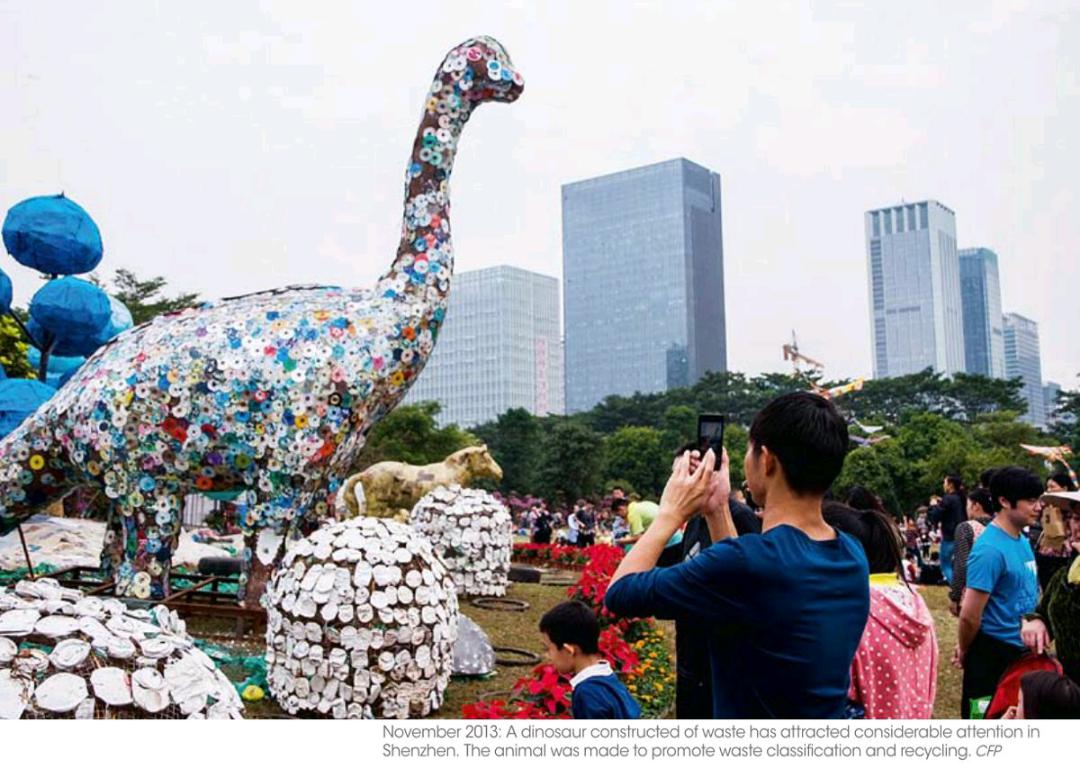
During that era, the primary purpose of sorting trash was utilitarian value of the waste rather than environmental awareness. Due to widespread poverty at the time, recyclable and reusable waste was scarce. “Even rotten vegetables were plucked from the trash to feed chickens,”reveals Wang Weiping, a garbage collection and processing expert and environmentalist. Hazardous waste wasnt even around yet. “Until 1979, Chinese people rarely threw away plastic. People kept and reused every piece of it.”
In recent years, China has been investing considerable manpower and other resources into waste classification, and again Beijing is taking a lead role. In the late 1990s, residents in some Beijing communities began sorting trash spontaneously. Interestingly, agencies promoting social progress were the first to notice such activities. Later, environmental protection groups started getting involved and ultimately the issue reached governmental agendas. After Beijing became one of Chinas eight pilot cities for waste classification in 2000, the government gradually began dominating the process. By the close of the 2008 Beijing Games, Beijings environmental protection organizations reported that the local government had invested nearly 10 billion yuan in waste classification and treatment.
Why Is This So Hard?
According to a July 2013 episode of the China Central Television program 30 Minutes on Economy, a total of 50,000 hectares of Chinas land had been covered by urban waste. Although large cities such as Beijing, Shanghai, Guangzhou, Shenzhen, and Hangzhou were sorting trash as early as 2000, the nation still faces a messy situation today.
Sorting trash is a slow and laborious process. It usually takes 10 to 20 years for a country to achieve optimum waste classification among its citizens. Japan and Germany, which are considered outstanding in waste classification, spent 23 years and 20 years respectively on the process. Yet today, according to statistics, about 17 percent of Japanese people and 22 percent of German people still dont get rid of their trash in accordance with waste classification requirements.
In China, a long road ahead remains for standard waste classification to be achieved nationwide. Contrasting the many foreign cities which require mandatory waste classification, sorting trash is still voluntary in China. Thus, finding methods to encourage residents to participate in the process remains a problem. “Since waste classification is a comparatively new idea for Chinese people, we should do something to encourage them to take part in it,”says Fu Tao, head of the Institute of Environmental Protection Industry under the School of Environment, Tsinghua University. He believes that training local residents is equally important. Helping residents to separate recyclable, unrecyclable, and toxic waste from other waste, and training people to properly treat kitchen garbage before disposal is very important. Only when residents are well-trained in waste classification will the country see satisfactory results.
Moreover, waste classification is just the beginning of the entire waste processing project. After trash is sorted, it must be transported separately, processed and reused as classified. “Infrastructure is vital,” stresses Wang Weiping. “If you want to recycle scrap iron, you need factories that can process scrap iron. You need paper recycling plants to recycle paper, and plastic recycling plants for plastic.” However, he explained that an integrated industrial chain cannot be created overnight. Due to the lack of back-end processing facilities, sometimes sorted waste is dumped back into a garbage truck with all the other trash, a move which decimates residentsenthusiasm for waste classification.
Moreover, related laws and regulations havent been enacted. Although material rewards may be encouraging in the beginning, a long-term mechanism still needs to be developed which includes a garbagefee system and punishment mechanism. At present, China spends a lot collecting, transferring, and handling trash (mainly waste incineration), which doesnt conform to common international practice. Wang Weiping notes that in the international community, nearly 67 percent of investment in waste disposal is used before trash is ever even handled, spent on measures that reduce trash, transform it into resources, or other management – only 33 percent of funds are used to physically dispose of waste.
A Long Way to Go
According to statistics from 30 Minutes on Economy, Beijings yearly volume of trash would fill a landfill the size of Tiananmen Square. Landfills are accompanied by a series of problems such as leakage and pollution, understandably environmentally catastrophic. Waste classification is one of the best methods of reducing trash and transforming it into resources. However, due to a lack of training with both residents and institutions as well as mechanisms for positive encouragement, management, and punishment, waste classification still has a long way to go in this country.
For a vast country like China, establishing sound supervision and punishment mechanisms has become a pressing task.
