功能梯度界面層模型斷裂問題研究進展
2012-07-09 02:32:08楊月誠
兵器裝備工程學報 2012年10期
邸 克,楊月誠
(第二炮兵工程大學 601 室,西安 710025)
隨著科技的發展,先進材料的應用越來越廣泛,當他們因為某些工程需要而黏結在一起時,其界面力學問題也日益成為學者們關注的熱點。人們為了有效地分析界面力學問題,評估結合材料的強度或壽命,提出了許多界面力學模型。其中,有一類功能梯度界面層模型是在實驗基礎上提煉而來的,在表征界面力學行為方面適應工程研究需要,具有廣泛的發展前景。本文簡要介紹功能梯度界面層模型,并對該模型斷裂問題的研究現狀和研究方法進行相應的探討。
1 功能梯度界面層模型簡介
值得注意的是,以上幾類界面模型均在一定程度上表征了界面力學行為,但尚未考慮真實界面黏結結構,即缺乏相應的實驗依據。1988 年,Delale 和Erdogan[8]依據界面兩側不同材料在細觀層面的相互擴散和滲透,提出了功能梯度界面層模型(也稱為非均勻界面層模型),該模型將原界面區域看成很薄的功能梯度材料,而兩側均勻材料的彈性模量和泊松比在界面層中以指數函數形式連續過渡(如圖2)。這種界面結合部材料力學屬性隨界面層厚度呈梯度變化的特性已被相應的實驗證實[9],因此,該模型具有一定的實驗基礎,在表征界面黏結結構時符合實際。此外,該模型還可有效消除裂紋尖端附近應力的振蕩性,避免裂紋兩側材料相互嵌入的不合理現象,在對應力強度因子等斷裂參量進行計算時,符合物理規律。
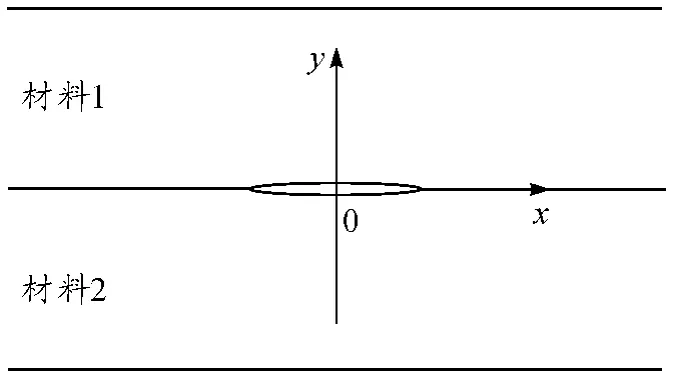
圖1 理想界面模型
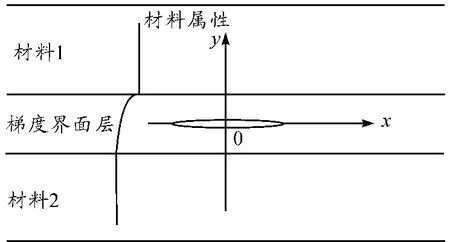
圖2 功能梯度界面層模型
2 模型斷裂問題
2.1 研究概述
目前,人們對含功能梯度材料的各種結構力學性能進行了大量研究,比如功能梯度涂層、殼以及板條等,相比之下,直接對功能梯度界面層的研究較少。但是,由于對均勻材料各種力學特性的研究已基本成熟,在分析功能梯度界面層模型時,其核心是兩均勻材料之間的功能梯度材料層,因此對功能梯度材料力學特性的研究成果可較為方便地應用到功能梯度界面層中。
2.2 模型斷裂問題的分類
人們為了有效研究功能梯度界面層的斷裂力學特性,一般采用特定的函數表示界面層內力學屬性的分布規律,而且多以理論推導的方式開展該領域的研究工作。按照界面層內所劃分層數的差異,功能梯度界面層模型可分成單層模型、互擴散(2 層)模型和分層(多層)模型。
1)單層模型
在功能梯度界面層模型發展的早期,界面層一般采用某種函數表征力學屬性(比如模量和密度)的分布,這也可稱為單層模型。其中應用最多的是指數函數,比如將界面層彈性模量(或剪切模量)μ2寫成以下形式

應用該指數型界面層模型,Erdogan 等開展了大量的工作,研究了平面[8]、反平面[10-11]和軸對稱[12]等狀態下的裂紋問題。Fildis 和Yahsi[13]研究了軸對稱條件下Ⅰ、Ⅱ和Ⅲ型裂紋問題;Babaei 等[14]采用Laplace 變換方法,討論了界面層中裂紋在動態沖擊載荷下的響應;Shbeeb 等[15]考慮界面層的平面裂紋問題,得到了應力強度因子和應變能釋放率。
為了更廣泛地表征功能梯度材料屬性,人們也嘗試用其他函數描述材料參數的變化。值得注意的是,這些函數不是任意選取的,而是要滿足控制微分方程有解析解的原則。Wang 等[16-19]采用一種冪律函數表示界面層中材料屬性的分布,這時,界面層內模量μ2寫為
1.2.3 評價指標 ①6個月前后護士跌倒知識、態度、行為測評問卷:問卷在參考相關文獻及咨詢有關護理專家的基礎上設計而成,并進行前期預試驗,內容包括跌倒相關知識15項條目、對跌倒重視程度及認識10項條目、跌倒預防實施行為10項條目組成。分值越高,表示護士跌倒預防知識、態度、行為實施越好。②6個月前后患者跌倒預防認知度和預防措施滿意度調查問卷,內容包括跌倒預防措施認知度12個條目和預防跌倒措施落實的滿意度7個條目,分值越高,表示患者跌倒預防措施認知度和措施落實滿意度越好。

另外,Cheng 等[22]將界面層內模量假設成縱坐標的倒數函數,其具體形式為

2)互擴散模型
Li 等[23]考慮了界面兩側材料之間擴散性能的差異,提出了1 個互擴散界面層模型。該模型采用2 種函數描述界面層的材料屬性變化,相對之前1 種函數形式的界面層模型來講,互擴散模型可更方便地表征界面層材料參數的非單調變化特性。
3)分層模型
真實情況下,由于設計或制造時各種因素的影響,功能梯度材料的參數變化可能是任意形式。因此,當參數任意變化時,不管是用單層模型表征,還是用互擴散模型描述,都難以達到較高的精度。為此,人們發展了一種分層模型來表征功能梯度材料屬性。該模型將功能梯度材料劃分成有限多個子層,在每個子層中用特定函數表征材料屬性。對于功能梯度界面層來講,人們主要采用常數[24-30]或線性函數[31-35]表示子層內材料屬性的分布規律。此外,人們對功能梯度板條、涂層等結構進行研究時,將功能梯度材料分成多個子層,并把每一子層內材料屬性設定為指數[36]或倒數[37]形式,這些方法也較容易在功能梯度界面層中得到應用。
除了上文介紹的理論研究之外,采用數值方法直接對功能梯度界面層裂紋問題進行研究較為少見。但是,人們對含裂紋的功能梯度材料進行了有限元數值計算[38],該成果對有限元數值方法在功能梯度界面層中的應用有一定的借鑒意義。
3 模型斷裂問題理論研究方法
目前,人們對功能梯度界面層裂紋問題進行理論分析時,已經形成了一套較為成熟的方法。下面以單層指數型界面層模型反平面裂紋問題[39]為例進行說明。
首先通過反平面問題的平衡方程和本構方程得到控制方程:

式中:Gj為各層材料的剪切模量;ωj為位移分量。
將式(4)進行Fourier 變換可得

式中,Fourier 變換可定義為
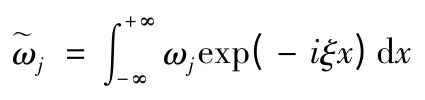
求解微分方程(5),再結合本構方程可以得到Fourier 變換域中應力τj和位移ωj的關系。
引入以下形式的位錯密度函數

式中:Δω2表示裂紋面上的位移增量。
由以上相關公式可推導出Cauchy 型奇異積分方程

式中:G0和τ0分別是裂紋面處的剪切模量和應力載荷;a 是裂紋長度的1/2。
該奇異積分方程可以在結合位移單值條件后通過配點數值方法[39]求解,在得到位錯密度函數g(x)的數值解后即可獲得應力強度因子等斷裂參量。
4 結束語
本文對功能梯度界面層模型斷裂問題研究現狀及研究方法進行了介紹。該模型與其他界面力學模型相比,可充分考慮界面黏結處細觀結構的影響。目前,對該模型的研究主要以理論方法開展,而且為了得到理論解,模型中許多參數均設置為理想狀況,因此,該模型在實際應用方面還有一些欠缺。在此后的研究中,該模型應結合有限元等數值方法加以擴展,使其在表征實際界面力學行為方面產生更好的應用效果。
[1]Williams M L.The stresses around a fault or crack in dissimilar media[J]. Bulletin of the Seismological Society of America.1959,49(2):199-204.
[2]England A H.A crack between dissimilar media[J].Journal of Applied Mechanics,1965,32(3):400-402.
[3]Atkinson C.On stress singularities and interfaces in linear elastic fracture mechanics[J].International Journal of Fracture,1977,13(6):807-820.
[4]Comninou M. The interface crack[J]. Journal of Applied Mechanics,1977,44(4):631-636.
[5]Comninou M.The interface crack in a shear field[J].Journal of Applied Mechanics,1978(45):287-290.
[6]Comninou M,Schmueser D.The interface crack in a combined tension-compression and shear field[J]. Journal of Applied Mechanics,1979(46):345-348.
[7]Mak A F,Keer L M,Chen S H,et al. A no-slip interface crack[J]. Journal of Applied Mechanics,1980( 47): 347-350.
[8]Delale F,Erdogan F.On the mechanical modeling of the interfacial region in bonded half-planes[J]. Journal of Applied Mechanics,1988,55(2):317-324.
[9]Monclus M A,Young T J,Maio D D. AFM indentation method used for elastic modulus characterization of interfaces and thin layers[J].Journal of Materials Science,2010(45):3190-3197.
[10]Erdogan F,Kaya A C,Joseph P F.The Mode Ⅲcrack problem in bonded materials with a nonhomogeneous interfacial zone[J]. Journal of Applied Mechanics,1991( 58): 419-427.
[11]Ozturk M,Erdogan F. Antiplane shear crack problem in bonded materials with a graded interfacial zone[J].International Journal of Engineering Science,1993,31(12):1641-1657.
[12]Ozturk M,Erdogan F.An axisymmetric crack in bonded materials with a nonhomogeneous interfacial zone under torsion[J].Journal of Applied Mechanics,1995(62):116-125.
[13]Fildis H,Yahsi O S.The axisymmetric crack problem in a non-homogeneous interfacial region between homogeneous half-spaces[J]. International Journal of Fracture,1996(78):139-164.
[14]Babaei R,Lukasiewicz S A.Dynamic response of a crack in a functionally graded material between two dissimilar half planes under anti-plane shear impact load[J].Engineering Fracture Mechanics,1998,60(4):479-487.
[15]Shbeeb N I,Binienda W K,Analysis of an interface crack for a functionally graded strip sandwiched between two homogeneous layers of finite thickness[J].Engineering Fracture Mechanics,1999(64):693-720.
[16]Wang X Y,Wang D.On the Griffith crack in a nonhomogeneous interlayer of adjoining two different elastic materials[J]. International Journal of Fracture,1996( 79): R51-R56.
[17]Wang X Y,Zou Z Z,Wang D.On the penny-shaped crack in a non-homogeneous interlayer under torsion[J].International Journal of Fracture,1996(82):335-343.
[18]Wang X Y,Zou Z Z,Wang D.On the penny-shaped crack in a nonhomogeneous interlayer of adjoining two different elastic materials[J]. International Journal of Solids and Structures,1997,34(30):3911-3921.
[19]Zou Z Z,Wang X Y,Wang D.On the modeling of interfacial zone containing a Griffith crack:plane problem[J].Key Engineering Materials,1998(145-149):489-494.
[20]Li C,Duan Z,Zou Z.Torsional impact response of a pennyshaped interface crack in bonded materials with a graded material interlayer[J].Journal of Applied Mechanics,2002(69):303-308.
[21]Choi H J.Impact response of a surface crack in a coating/substrate system with a functionally graded interlayer:antiplane deformation[J]. International Journal of Solids and Structures,2004(41):5631-5645.
[22]Cheng Z Q,Zhong Z.Fracture analysis of a functionally graded interfacial zone between two dissimilar homogeneous materials[J].Science in China Series G:Physics,Mechanics & Astronomy,2006,49(5):540-552.
[23]Li Y D,Lee K Y.Mechanical modeling and transient antiplane fracture analysis for the graded inter-diffusion regions in a bonded structure[J]. Meccanica,2009 ( 44): 389-408.
[24]Itou S,Shima Y.Stress intensity factors around a cylindrical crack in an interfacial zone in composite materials[J].International Journal of Solids and Structures,1999(36):697-709.
[25]Itou S.Stress intensity factors around a crack in a nonhomogeneous interfacial layer between two dissimilar elastic halfplanes[J]. International Journal of Fracture,2001(110):123-135.
[26]Itou S. Transient dynamic stress intensity factors around a crack in a nonhomogeneous interfacial layer between two dissimilar elastic half-planes[J]. International Journal of Solids and Structures,2001(38):3631-3645.
[27]Itou S.Thermal stresses around a crack in the nonhomogeneous interfacial layer between two dissimilar elastic halfplanes[J]. International Journal of Solids and Structures,2004(41):923-945.
[28]Itou S. Stress intensity factors around a moving Griffith crack in a non-homogeneous layer between two dissimilar elastic half-planes[J]. Acta Mechanica,2004( 167): 213-232.
[29]Itou S.Stress intensity factors for a moving cylindrical crack in a nonhomogeneous cylindrical layer in composite materials[J].Archive of Applied Mechanics,2005(75):18-30.
[30]Itou S.Transient dynamic stress intensity factors around two rectangular cracks in a nonhomogeneous interfacial layer between two dissimilar elastic half-spaces under impact load[J].Acta Mechanica,2007(192):89-110.
[31]Wang Y S,Gross D. Analysis of a crack in a functionally gradient interface layer under static and dynamic loading[J]. Key Engineering Materials,2000( 183 - 187): 331-336.
[32]Wang Y S,Huang G Y,Gross D.On the mechanical modeling of functionally graded interfacial zone with a Griffith crack:anti-plane deformation[J]. Journal of Applied Mechanics,2003(70):676-680.
[33]Huang G Y,Wang Y S.A new model for fracture analysis of a functionally graded interfacial zone under harmonic antiplane loading[J]. Engineering Fracture Mechanics,2004(71):1841-1851.
[34]Huang G Y,Wang Y S,Yu S W. Fracture analysis of a functionally graded interfacial zone under plane deformation[J]. International Journal of Solids and Structures,2004(41):731-743.
[35]Wang Y S,Huang G Y,Gross D.On the mechanical modeling of functionally graded interfacial zone with a Griffith crack:plane deformation[J].International Journal of Fracture,2004(125):189-205.
[36]Guo L C,Noda N.Modeling method for a crack problem of functionally graded materials with arbitrary properties—piecewise-exponential model[J]. International Journal of Solids and Structures,2007(44):6768-6790.
[37]Cheng Z Q,Meguid S A,Zhong Z.Thermo-mechanical behavior of a viscoelastic FGMs coating containing an interface crack[J].International Journal of Fracture,2010(164):15-29.
[38]Kim J H,Paulino G H.Finite element evaluation of mixed mode stress intensity factors in functionally graded materials[J]. International Journal for Numerical Methods in Engineering,2002(53):1903-1935.
[39]Erdogan F,Gupta G D.On the numerical solution of singular integral equations[J]. Quarterly of Applied Mathematics,1972,29(4):525-534.
猜你喜歡
中華詩詞(2022年6期)2022-12-31 06:41:24
艦船科學技術(2022年13期)2022-08-11 09:29:16
當代陜西(2020年13期)2020-08-24 08:22:02
World Journal of Diabetes(2019年7期)2019-07-23 11:52:08
制造技術與機床(2017年5期)2018-01-19 02:49:17
中國科技論壇(2017年7期)2017-07-25 08:49:53
濰坊學院學報(2016年2期)2016-12-01 13:00:11
新聞傳播(2015年11期)2015-07-18 11:15:04
建筑材料學報(2014年3期)2014-03-11 17:08:02
中國中醫藥現代遠程教育(2014年22期)2014-03-01 04:32:55