擬心葉黨參揮發(fā)油成分的 GC-MS分析及其抗菌活性
2010-09-15 04:26:24寶福凱張才軍程永現(xiàn)
天然產(chǎn)物研究與開發(fā) 2010年3期
關(guān)鍵詞:植物
邱 斌,呂 青,寶福凱,張才軍,程永現(xiàn)*
1云南省藥物研究所,昆明 650111;2中國科學(xué)院昆明植物研究所植物化學(xué)與西部植物資源持續(xù)利用國家重點(diǎn)實(shí)驗(yàn)室,昆明 650204;3昆明醫(yī)學(xué)院微生物學(xué)與免疫學(xué)系,昆明 650031
擬心葉黨參揮發(fā)油成分的 GC-MS分析及其抗菌活性
邱 斌1,呂 青2,寶福凱3,張才軍3,程永現(xiàn)2*
1云南省藥物研究所,昆明 650111;2中國科學(xué)院昆明植物研究所植物化學(xué)與西部植物資源持續(xù)利用國家重點(diǎn)實(shí)驗(yàn)室,昆明 650204;3昆明醫(yī)學(xué)院微生物學(xué)與免疫學(xué)系,昆明 650031
運(yùn)用氣-質(zhì)聯(lián)用技術(shù)對云南產(chǎn)桔梗科植物擬心葉黨參 (Codonopsis cordifolioidea)的鮮根和干根的揮發(fā)油成分進(jìn)行了比較研究,鑒定了其中六十三個(gè)成分,并探討了其具有濃郁臭味的分子基礎(chǔ)。采用八種菌株對其揮發(fā)油成分進(jìn)行了抗菌活性測試,結(jié)果表明僅金黃色葡萄球菌、傷寒沙門菌和痢疾桿菌為敏感菌株。
擬心葉黨參;桔梗科;氣-質(zhì)聯(lián)用;揮發(fā)油;抗菌活性
Introduction
The genusCodonopsis(Campanulaceae)is represented in China by 39 species.Quite a number of Codonopsis species such asC.pilosulaandC.tangshenare commonly used as herbal remedies due to their distinct tonic effects[1].Whereas,the roots of some Codonopsis species are awell-known vegetable in southwestChina, these examples includeC.cordifolioidea,C.bulleyana,C.m icrantha,andC.subglobosa[2].C.cordifolioideaTsoong is a herbaceous plant spread in Yunnan,Tibet and Sichuan Provinces.Its roots,locally known as“Choushen”,with meaning of a plantwith a strong unpleasant odor,has been used as a special food in Yunnan Province since ancient times,and now,this species has become an important economic plant widely cultivated in several areas of Yunnan Province[3].After harvest in autumn,tons of roots occur in vegetable markets and gain best sales throughout the winter.The common use for the roots is to co-boil with chicken, pork or eggs,after drinking soup and eating the roots, the fartwill be frequently produced,and thus the roots have been considered to be a digestive stimulant[4].In contrast toC.pilosula,the roots ofC.cordifolioideacan liberate a strong olid smell when they are out of earth.This characteristic odor will be enhanced especially after the root skins are broken.Some pr imary experimental and clinical investigations have been carried out on the otherCodonopsisspecies with the general name of“Choushen”[5-10],however,little is know about the characteristic odor principles and biological activity of the essential oils fromC.cordifolioidea.In this paper,we describe the chemical composition and antimicrobial activity of the volatile oils from the fresh and dried rootsofC.cordifolioideain the hope of providing evidences for further development of this vegetable.
Materials andM ethods
Plantmaterial
The fresh and air-dried roots ofC.cordifolioideawere collected in Yiliang of Yunnan Province in October, 2006,and identified by Prof.Xiwen Li at Kunming Institute ofBotany,Chinese Academy of Sciences,China. A voucher spec imen(CHYX0390)was deposited at the State Key Laboratory of Phytochemistry and Plant Resources inWest China,Kunming Institute ofBotany, Chinese Academy of Sciences,China.
Isolation of the essential oils
The fresh(500 g)and dried roots(165 g)ofC.cordifolioideawere water distilled for 3 h using a Clevengertype apparatus,respectively,the distillates were partitioned with ether followed by concentrating at atmospheric pressure to yield 15.0 mg essential oils from fresh materials,and 6.0 mg essential oils from dried materials.The essential oils obtained were stored at-20℃until use.
GC-M S analysis
The essential oils were analyzed by GC/MS on a HP6890GC coupled to a 5973MS(Agilent Technologies,USA)equipped with a HP-5MS silica capillary column(30 m ×0.25 mm i.d.;film thickness 0.25 μm).The oven temperature was programmed to increase from 80 to 240℃at a rate of 5℃/min.The injector temperature was 250℃.The carrier gaswas helium at a flow rate of 1 mL/min.1.0μL samples in hexane were injected and the split ratio was adjusted to15:1.The mass spectra in the electron impact mode were recorded at 70 eV with a scan range from 35-500. The components in the essential oils of fresh materials were identified by comparison of their mass spectra with those ofW iley7n.1 library data,the compounds in the essential oils of dried materials were identified by comparison of their retention times with those of fresh materials under the same recording conditions.
Ant im icrobial assay
Antibacterial properties were tested by previously reported agar dilution method[11];[12].The bacterial strains employed wereStaphylococcus aureus CMCC26001(CMCC,National Center forMedical Culture Collections,Beijing,People’s Republic of China), Escherichia coli CMCC44103,Sa lmonella typhimurium CMCC80087,and Shigella flexneri CMCC51335,and the following clinically isolated strains:Staphylococcus epidermidis,Bacillus subtilis,Salmonella paratyphi-A, Salmonella paratyphi-B.Cefradine and gentamycinwere used as reference standards in order to control the sensitivity of the test strains.Plates containing only MHA andMHA and 1%DMSO served as negative and solvent controls.Testswere perfor med in triplicate and repeated once.
Research and D iscussion
Chem ical constituents of the essential oils
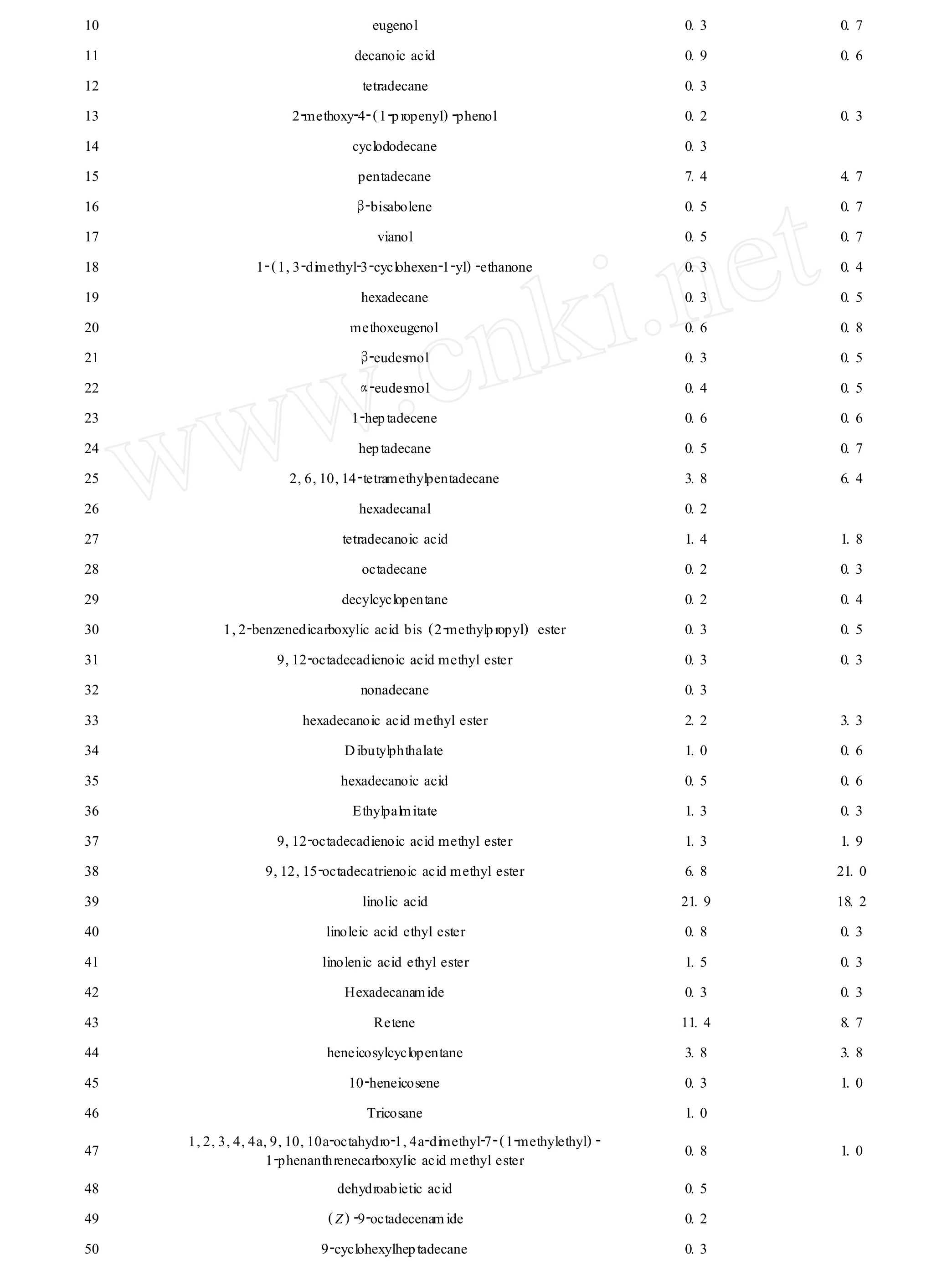
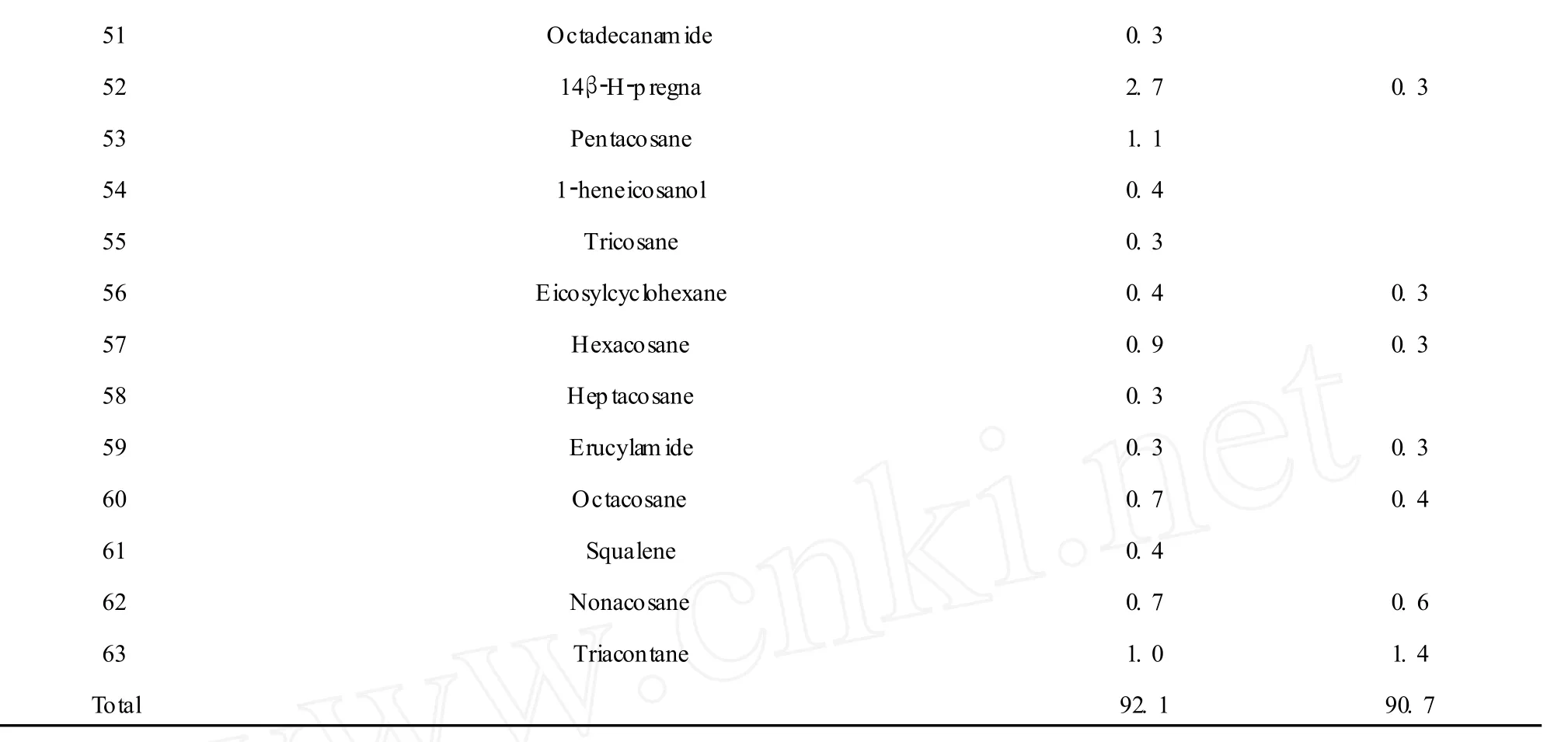
Hydrodistilled essential oils from fresh and air-dried roots of C.cordifolioidea were analyzed by GC/MS.The identified constituents and their relative percentages were shown in Table 1.Sixty-three compounds were characterized in the essential oils of fresh materials,representing 92.1%of the oils.Of which twelve componentswere identified as oxygenated aromatic hydrocarbons,two compounds are phenanthrene derivatives,two compounds are eudes mane-type sesquiterpenes,and four components are alkyl amides.In contrast,fortyseven compoundswere identified in the essential oils of air-dried samples,representing 90.7% of the total compounds.
The main components in the essential oils of fresh materialswere identified as linolic acid(21.9%),retene(11.4%),pentadecane(7.4%),9,12,15-octadecatrienoic acid methyl ester(6.8%),and heneicosylcyclopentane(3.8%).Several minor components such as 14β-H-pregna(2.7%),hexadecanoic acid methyl ester(2.2%),benzeneethanol(2.2%),and tetradecanoic acid(1.4%)were also significant.The concentration of retene in the essential oils is relatively much higher,accounting for 11.4%,besides,the total amounts ofoxygenated phenyl derivatives reach to 8.8% in the volatiles.Whereas,the GC-MS profiles indicated the presence of only three sesquiterpenes,four eugenol monoterpene derivatives at a very low level,which was quite different from other common plant species abundant in terpenes.Similar phenomena were also reported inC.pilosula[13,14].By comparison of the volatile oils from fresh and dried materials,the relative concentrations of 2,6,10,14-tetramethylpentadecane and 9,12, 15-octadecatrienoic acid methyl ester were greatly increased from 3.8%to 6.4%,and from 6.8%to 21. 0%,respectively,before and after the materials were dried.Considering that the characteristic odor of the roots is decreased when air-dried,thismay suggest that the above two compounds and their analogues are unlikely to be responsible for the typical odor.It was reported that sixty-six volatiles have been identified in the essential oils ofC.pilosula[13],the major compound classes are alkyl hydrocarbons,acids,esters,and oxygenated aromatic derivatives.Although the total percentage of fourteen aromatic derivatives detected was about 15.3%,however,the essential oils ofC.pilosula don’t display typical odor reminiscent ofC.cordifolioidea,this reflected that themixture of alkyl hydrocarbons and certain phenyl compounds in the essentialoils ofC.pilosuladon’t appeared to contribute to the special odor of theCodonopsisspecies.To the best of our knowledge,there was only one report on the chemical constituents of the essential oils of an unidentified Codonopsisspecieswith special odor similar to the title plant,and only twenty-five compounds accounting for 62.8%of the volatiles were characterized,including aliphatic acids and their esters,and non-oxygenated phenyl derivatives.The distinct difference of GC-MS fingerprints be tween this unidentifiedCodonopsisspecies andC.cordifolioideasuggested that they were differentCodonopsisspecies.The odor of the unidentified species has been considered to be substituted benzene analogs since fourteen such compounds representing 8. 8%were detected in the essential oils[15],however, whether the remained other compounds in the essential oils contributed to the special odor couldn’t be completely disclosed.Taken all the above factors into consideration,the characteristic odor ofC.cordifolioidea may be caused by a blend of retene with a substantial abundance in the essential oils and other oxygenated aromatic hydrocarbons.Actually,retene,as a wood smoke marker and a major product of conifer trees,has been well known.In addition,it is noted that the level of essential oils in the roots ofC.cordifolioideais very low,in spite of their strong odor,this may imply that the odor potency of volatiles is quite high.
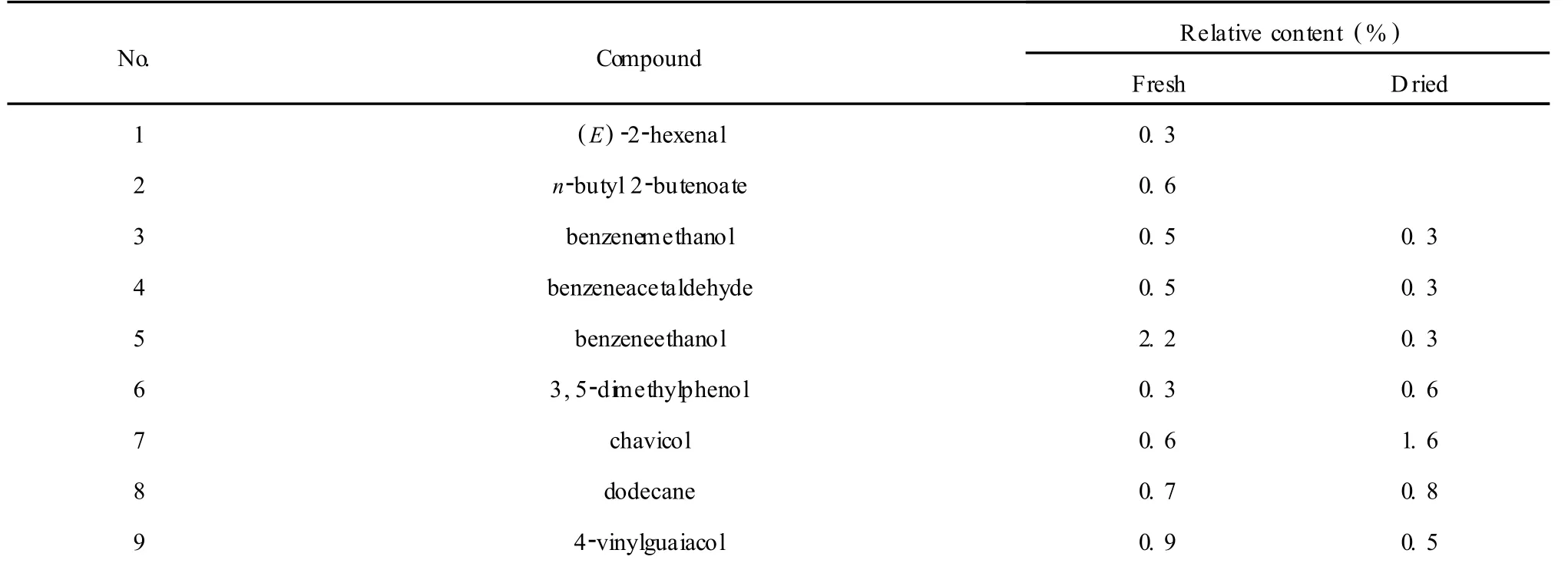
Table 1 Composition of the essential oils in fresh and dried roots ofC.cordifolioidea
Ant im icrobial activity
The antimicrobial properties of the essential oils from fresh and dried materials were tested against eight microorganis ms.The results(Table 2)showed that the essential oils from fresh sampleswere active toStaphylococcusaureus and Salmonella typh imurium,with the M IC of 25μg/mL,and the essential oils from dried samples were effective againstStaphylococcus aureus, Salm onella typhim urium,andShigella flexneriwith the M IC of 50μg/mL.All the other microorganisms were not sensitive to the both essential oils,except for the foregoingmicrobial strains.The antimicrobial properties of the essential oils could be attributed to phenolics such as eugenol derivatives,and long chain alcohol such as 1-heneicosanol,since phenolics and long chain (C6-C10)alcohols have been proven to be active against bacteria[16][17].In addition,other minor componentsmay also play a synergistic role for the ant imicrobial activity[18].
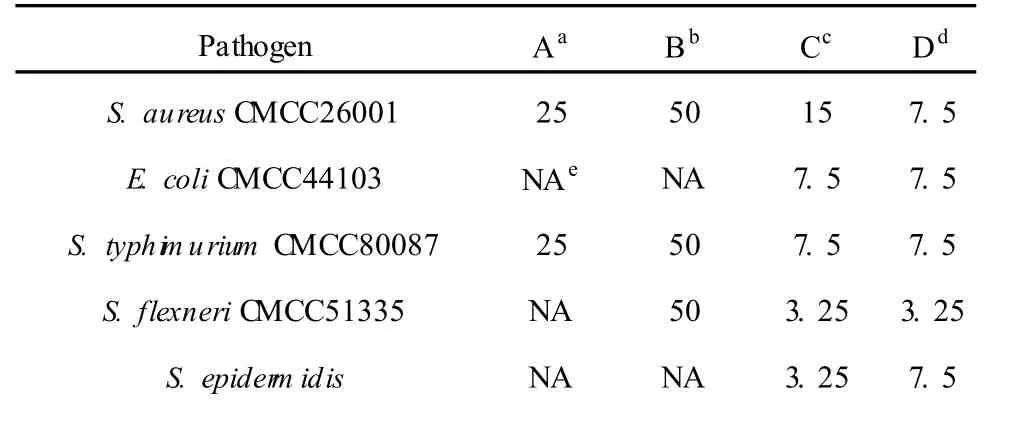
Table 2 Ant im icrobial avtivity of essent ial oils ofC.cordifolioidea(M I C values,μg/mL).
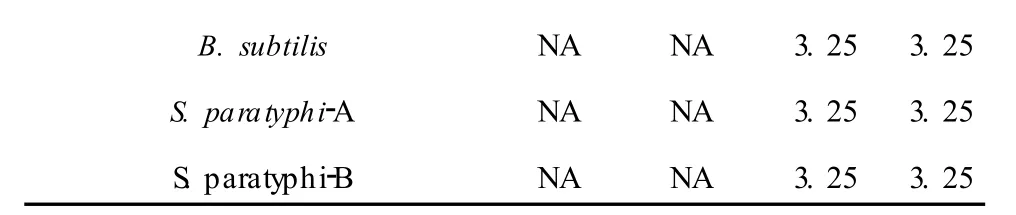
Note:aessential oils of fresh samples;bessential oils of dried samples;ccefradine;dgentamycin;eNA:no activity.
This study revealed the chemical fingerprintsof the isolated essential oils.By comparison with fresh and dried samples,and literature data,the characteristic odor of the rootswas tentatively identified as a blend of retene with oxygenated aromatic hydrocarbons.The ant imicrobial activity of the essential oils suggested the potential use of this plant as an important ant imicrobial source. AcknowledgementsWe thankMrs.Y.Zhang andM.Shi at the Department of Microbiology and immunology, KunmingMedical College,for their assistance in antimicrobial assays.
1 HongDY,Lian YS,ShenLD.Flora of China.Beijing:Science Press,1983:32-69.
2 Yunnan Corporation of Materia Medica.Yunnan Zhongyao Ziyuan Minglu.Beijing:Science Publishing House,1993. 544-546.
3 Chen ZJ,WeiQH,Zhou JY.Research progresson Choushen.Yunnan J Trad Chin M ed M ater,2006,27:49-50.
4 Health Office of Yunnan Province.Chinese HerbalMedicine in Yunnan Province(Continued).Kunming:People’s Publishing House,1973.570-600.
5 Li SZ,Ye GZ.Pr imary investigations on Choushen.J Yunnan College Trad Chin M ed,1994,17:17-20.
6 Duan QF,Zhao JS.Study on the determination of trace elements in the Codonopsis bulleyana forest ex diels by atomic absorption method.J Yunnan Univ Nationalities,Nat Sci, 2002,11:159-161.
7 Duan QF,Zhao H,Wang YQ.The research situation and exploit conception of Codonopsis bulleyana.J Yunnan UnivNationalities,Nat Sci,2003,12:39-41.
8 Shang YQ.Processing technology of preserved foodswith low sugar of Choushen.J Yunnan Trad Chin M ed,2001,24:15-16.
9 Li YL,Fu JJ,Shi L.The determination of some elements in Choushen.Acad J Kunm ing M ed College,1996,17:57-58.
10 Chen YG,Zhu Y,Wei JX,et al.Chemical constituents of Choushen in Yunnan.Acad J Kunm ing M ed College,1994, 15:70.
11 Liang HX,Bao FK,Dong XP,et al.Antibacterial triterpenes fromCentipeda m inim a.Acat Botanica Yunnannica,2007, 29:479-482.
12 Clinical and Laboratory Standards Institute.Methods for dilution ant imicrobial susceptibility tests for bacteria that grow aerobically.Approved Standards,7thEd,2006,(M7-A7). Wayne:Clinical and Laboratory Standards Institute.
13 Tan LQ,Li Y,Jia ZJ.Studies on the components of essential oil of Codonopsispilosula FranchNannf.J Lanzhou Univ,Nat Sci,1991,27:45-49.
14 Xie J,Zhang YZ,Gu YZ.Study on the volatile chemical constituents ofCodonopsis pilosula.Chin Phar m J,2000,35: 583-586.
15 QiuMH,Ding JK,Nie RL.The volatile chemical components with special smell fromCodonopsissp..Acta Bot Yunnanica, 1987,9:371-373.
16 Xie XF,Cai XQ,Zhu SY,et al.Chemical composition and antimicrobial activity of essentialoils ofChaenom eles speciosafrom China.Food Chem,2007,100:1312-1315.
17 Delaquis PJ,Stanich K,Girard B,et al.Antimicrobial activity of individual and mixed fractions of dill,cilantro,coriander and eucalyptus essentialoils.Int J FoodM icrobiol,2002,74: 101-109.
18 Marino M,Bersani C,Comi G. Impedance measurements to study the antimicrobial activity of essential oils fromLam iaceaceand Compositae.Int J Food M icrobiol,2001,67:187-195.
GC-M S Analysis and Ant im icrobial Activity of EssentialO ils from the Fresh and Dried Roots ofCodonopsis cordifolioidea
Q IU Bin1,LV Qing2,BAO Fu-kai3,ZHANG Cai-jun3,CHENG Yong-xian2*
1Yunnan Institute of M ateria M edica,Kunm ing 650111,China;2State Key Laboratory of Phytochem istry and Plant Resources in W est China,Kunm ing Institute of Botany,Chinese Academ y of Sciences,Kunm ing 650204, China;3Departm ent ofM icrobiology and Imm unology,Kunm ing M edical College,Kunm ing 650031,China
The essential oils were extracted from the fresh and dried roots ofCodonopsis cordifolioideaby steam distillation approaches,and sixty-three compounds were identified by GC-MS analysis.The main principles are linolic acid (21.9%),retene(11.4%),pentadecane(7.4%),methyl-9,12,15-octadecatrienoate(6.8%),and heneicosylcyclopentane(3.8%).The total oxygenated aromatic hydrocarbons reach to 8.8%.Some components such as 9,12,15-octadecatrienoic acid methyl ester in the essential oils of dried roots vary greatly compared to fresh materials.According to the different relative contents,the possible diagnostic molecularmarkers for the characteristic odorwere pointed out.The ant imicrobial activity of the both essential oilswas evaluated against eightmicrobial strains using agar dilution method. The results showed that onlyStaphylococcus aureus,Salm onella typh im urium,andShigella flexneriwere sensitive to the essential oils.
Codonopsis cordifolioidea;GC-MS;essential oils;antimicrobial activity
August 25,2008;Accepted December 16,2008 Foundation Item:This project was supported by the“Xi-Bu-Zhi-Guang”Project from Chinese Academy of Sciences,and a Talent Scholarship for the Youth of Yunnan(No.2007PY01-48).
Q946.91;R284.1
A
1001-6880(2010)03-0445-06
*Corresponding author Tel:86-871-5223048;E-mail:yxcheng@mail. kib.ac.cn
猜你喜歡
少兒科學(xué)周刊·兒童版(2021年19期)2021-12-10 14:13:40
小學(xué)閱讀指南·低年級(jí)版(2021年3期)2021-03-19 06:12:40
小天使·二年級(jí)語數(shù)英綜合(2020年8期)2020-12-23 04:57:40
小天使·一年級(jí)語數(shù)英綜合(2020年11期)2020-12-16 02:57:22
學(xué)苑創(chuàng)造·A版(2020年3期)2020-04-24 09:21:39
小溪流(畫刊)(2017年11期)2018-01-09 19:15:14
少兒科學(xué)周刊·兒童版(2017年5期)2017-06-29 22:24:28
少兒科學(xué)周刊·兒童版(2017年5期)2017-06-29 16:46:33
紅領(lǐng)巾·萌芽(2017年5期)2017-06-23 10:35:59
爆笑show(2016年7期)2017-02-09 09:36:13