
Hepatocellular carcinoma(HCC)&liver transplantation(LT)
2010-05-16 06:23:54,,,,
外科研究與新技術 2010年1期
關鍵詞:肝癌
,,,,
1.Department of General Surgery,Tongji Hospital,Tongji University School of Medicine,Shanghai200065,China;2.Department of Abdominal and Transplantation Surgery,Medical School of Hannover,Carl-Neuberg Str1,Hanover 30625,Germany;3.Department of Abdominal and Transplantation Surgery,Arnold-Heller-Straβe,Kiel 24105,Kiel University School of Medicine,Germany
Hepatocellular carcinoma(HCC)&liver transplantation(LT)
ZHAO Ze-ming1,Becker Thomas2,3,FAN Yue-zu1,Ringe Bastian2,Klempnauer Jürgen2
1.Department of General Surgery,Tongji Hospital,Tongji University School of Medicine,Shanghai200065,China;2.Department of Abdominal and Transplantation Surgery,Medical School of Hannover,Carl-Neuberg Str1,Hanover30625,Germany;3.Department of Abdominal and Transplantation Surgery,Arnold-Heller-Straβe,Kiel24105,Kiel University School of Medicine,Germany
Hepatocellular carcinoma(HCC)is the most common primary malignancy of the liver.Liver transplantation for hepatocellular carcinoma(HCC)in patients with cirrhosis is a radical treatment of the tumor and associated precancerous state,especially for HCC developing within an established background of chronic liver disease.Shortage of organ donors has resulted in overall increase of waiting list time with increased risk of dropout due to tumor progression.Neoadjuvant therapies,transarterial chemoembolization(TACE),radiofrequency ablation(RFA)and percutaneous ethanol injection(PEI)have emerged as bridging therapy to control tumor growth.Although expansion of selection criteria is necessary,it should be assessed in the setting of prospective well-designed studies.This research presents German experience including single-center(medical school of Hannover)of undergoing transplantation for HCC.Rational use of liver transplantation is more beneficial for humanbeing.
Hepatocellular carcinoma;Liver transplantation;Living donor liver transplantation;Treatment
Hepatocellular carcinoma(HCC)is one of the most common cancers in the world.With more than 1 000 000 patients diagnosed each year,[1,2]it is the fifth most common cancerworldwide[3],and its incidence will increase further in the next two decades in both Europe and the United States.[4,5]This is a result of the spread of hepatitis C virus(HCV)and hepatitis B virus(HBV)infection during the past century.[4,5]HCC now constitutes the leading cause of death in cirrhotic individuals[6].
Epidemiology
The epidemiology of HCC exhibits two main patterns,one in North America and Western Europe and another in Non-Western Countries(regions such as central Asia,especially china;sub-Saharan Africa,Southeast Asia).HCC is the most common cancer,generallyaffectingmen morethan women.This variability is in part due to the different patterns of Hepatitis B transmission in differentpopulationsinfection at or around birth.The period of time between hepatitis B infection and development into HCC can be years even decades,whereas the average time from the diagnosis of HCC to death is only 5.9 months,according to one Chinese study during the 1970 - 80 s,or 3 months(median survival time)in Sub-Saharan Africa according to Manson’s textbook of tropical diseases.
HCC is one of the deadliest cancers in China.Food infected withAspergillus flavus(especially peanuts and corns stored during prolonged wet seasons)which produces aflatoxin,poses another risk factor for HCC.In developed western countries,HCC is generally seen as rare cancer,normally occurring of those with pre-existing liver disease and HCV Infection.HCC appears to be rising dramatically in incidence too.With new therapies being available for the treatment of small HCC,there is a growing emphasis on recognition of risk factors and early diagnosis.
The world age-adjusted incidence of HCC has been calculated to be 14.67 per 100 000 populations for men and 4.92 for women.[7]The lowest rates are found in developed countries(7.64 for men,2.65 for women),and the highest rates are in developing countries(17.84 for men,6.17 for women,Table1).
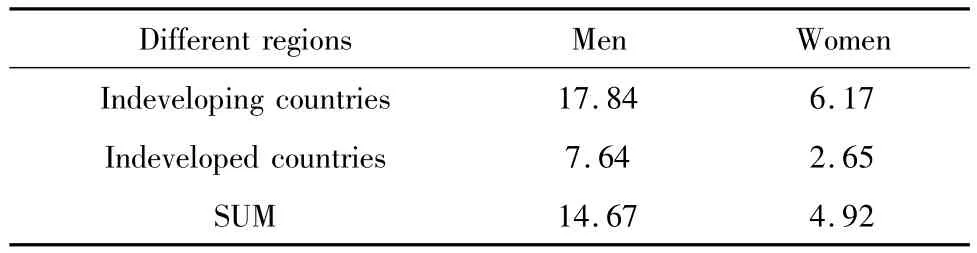
Table 1 HCC incidence in different regions per(100 000 populations)[7]表1 不同地區肝細胞癌每十萬人口發病率
When viewed as estimated age-adjusted incidence rates of liver cancer per 100 000 men(Table 2),in all regions,the rates recorded were two to three times higher in men than in women.The lethality of this cancer is evident by the fact that,in the above databases,mortality from HCC was virtually equivalent to the incidence figures in the same year.
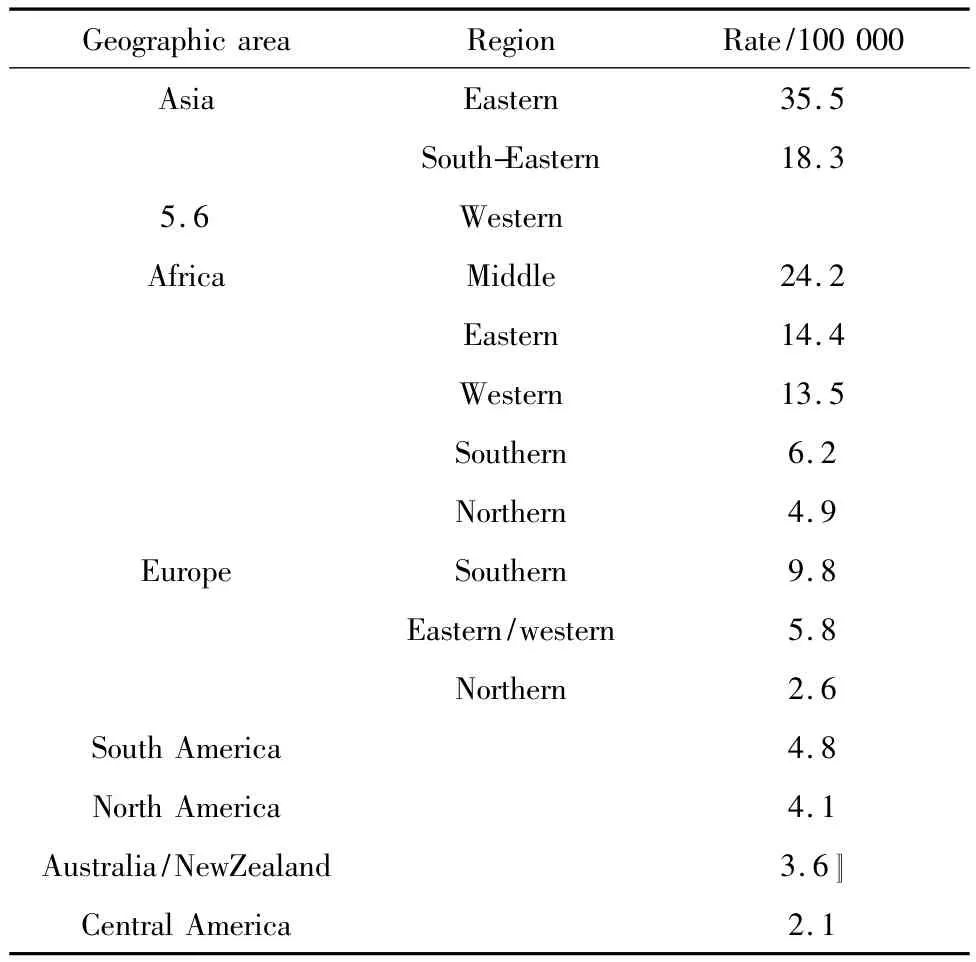
Table 2 Estimated age-adjusted incidence rates of HCC in men per 100 000 population world wide,2000[3]表2 2000年世界范圍內年齡校正后每十萬人口男性肝細胞癌發病率
The most recent worldwide data on HCC come from the World Health Report,2003 of the World Health Organization(WHO)that provides estimates of death by cause and sex in WHO regions for the year 2002[8].The estimated burden of disease by cause indicated that there was a total of 714 600 new cases of HCC(71 percent among men).Liver cancer ranked fourth in mortality due to cancer,after cancers of the trachea/bronchus/lung,stomach,and colon/rectum.For male subjects,liver cancer ranked third;whereas for women,it ranked fifth.
Treatment strategy for HCC:liver resection and liver transplantation
Treatment options of HCC and prognosis are dependent on many factors but especially on tumor size and staging.Because the vast majority of cases occurin patientswith underlying liverdisease,curative resection is possible in the minority.For example,even with the screening ofhepatitis B surface antigen positive(HBsAg+)patients and an aggressive surgical approach,only 40%of patients in Shanghai are surgical candidates and long-term(10 years)survival rate is less than 15%[9].Furthermore,the five-year survival rate of recurrence-free survival after theresection ofsingle,small(< 5 cm)hepatocellular carcinomas is practically zero[10].
The first human liver transplants(LT)were performed in patients with extremely large hepatic tumors[11].The role of LT in the management of HCC has evolved over three different periods.
During the 1980s,the value of orthotopic liver transplantation(OLT)in the treatment of hepatocellular carcinoma hasoften been debated.Although liver replacement could be curative for patients with tumors confined to the liver,the long-term results of liver transplantation in patients with hepatocellular carcinoma have been disappointing,with an overall five-year survival rate ranging from 30 to 40 percent[12-19]and results from these early cases were poor[20].
In the 1980s the outcomes(recurrence rate of 32%-54% and 5-yearsurvivalbelow 40%)reflected the originalacceptance ofexceedingly advanced tumors with adverse prognostic factors such as macroscopic vascular invasion,lymph node involvement,and extrahepatic spread[21,22]These poor outcomes led to questioning of HCC as a transplant indication in some programs and to discarding a very aggressive and expensive treatment in patients with limited hope for long-term survival.In the past,it was tempting to conclude that liver transplantation for hepatocellular carcinoma was futile[16,23]
The problem that optimal treatment for patients with cirrhosis who have single hepatocellular carcinomas no more than 5 cm in diameter—resection or transplantation—may become a subject of debate.
The second era started during the early 1990s.Retrospective analysis has shown that patients with cirrhosis who have stage T1 or T2 tumors(according to UICC TNM classification)do better after transplantation(five-year survival,67 - 75 percent)than after hepatic resection(0 - 56 percent)[21,22].
Analysis of the previous experience suggested that patients with incidental tumors had the same outcome as patients with nonmalignant disease[12].Following this concept,some pioneering groups selecting“optimal candidates”reported 70%5-year survival with a recurrence rate below 15%[24-27].This waschampioned by Bismuth etal[28]and by Mazzaferro et al,[25]who established in a landmark manuscript the so-called Milan criteria.
Mazzaferro et al.[25]reported excellent 3-year survival rates for patients with a single HCC lesion<5 cm in size or 3 or fewer lesions with the largest measuring <3 cm.These so-called Milan criteria have been accepted worldwide as identifying candidates with good prognosesand low recurrence rates.However,as documented in this study,long-term survival can be achieved with liver transplantation in carefully selected patients.During this period,transplantation was considered in most centers as the first-line option for early HCC.
Subsequently,Yao et al.[29]reported that liver transplant candidates were with single tumors <6.5 cm in diameter,or <3 tumors with the largest being<4.5 cm in diameter and a total tumor burden of<8 cm(so-called UCSF criteria).(Table3).

Table 3 Milan and UCSF staging criteria for hepatocellular carcinoma表3 米蘭標準及加州標準的對照比較
The United Network of Organ Sharing(UNOS)[30]has adopted the criteria proposed by the group from Milan,Italy,solitary tumor < 5 cm,or three or fewer lesions none > 3 cm(the Milan criteria[25])—as selection guidelines for OLT.
Other treatments for HCC
At detection or over time,hepatocellular carcinoma(HCC)is multicentric in origin,against a background of chronic hepatic disease at different stages.Orthotopic liver transplantation(OLT)is the only therapy able to definitely cure both diseases.When OLT is not feasible,all other options can be only palliative[31].
Transarterial chemoembolization (TACE),Radiofrequency ablation(RFA)and percutaneous ethanol injection(PEI)were the first regional and local ablative techniques that came into use for irresectable HCC.The selection of an appropriate treatment strategy for patients with HCC depends on careful tumor staging and assessment of the underlying liver disease.RFA and PEI are now considered as the local ablative techniques of choice for the treatment of,preferably small,HCC.When tumors are located close to bile ducts or large vessels,PEI remains a valuable therapy[32]. For larger tumors, their association with other techniques,such as TACE,seems adequate[33].
Local ablative therapies such as PEI,RFA,and TACE offer palliation for patients for whom surgical approaches are contraindicated.Percutaneous alcohol injection and RFA are minimally invasive and can be used on an outpatient basis,usually for tumor nodules smaller than 3 cm.When these therapies are used for small tumors,the survival rates can be similar to those achieved by partial hepatectomy.TACE may be used as an interim treatment for patients waiting for OLT.Although TACE is often used for the palliation of large tumors,significant survival benefits have not yet been demonstrated for this indication[34].In carefully selected patients,The combination of limited TACE with PEI or RFA may lead to improved survival and decreased risk of liver failure[35].
Liver transplantation in Germany
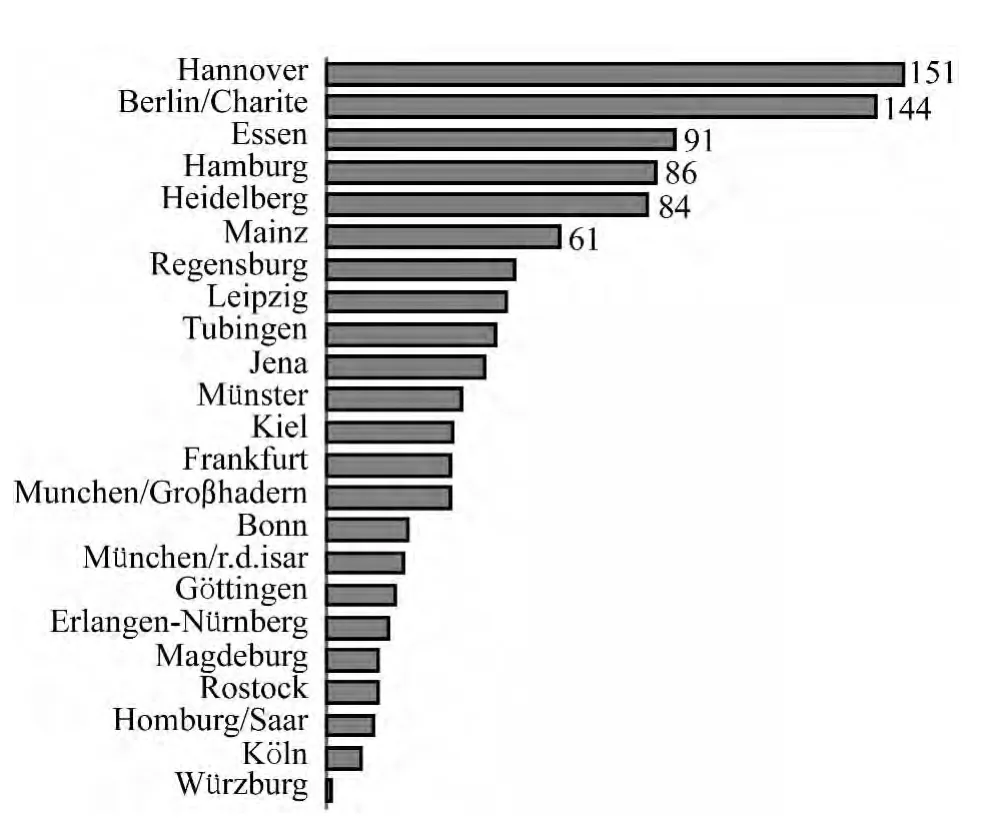
Fig.1 Distribution of Liver transplantation at 23 centers(971 CDLT and 82 LDLTwere performed in 2006,Germany)[36]圖1 2006年德國23家肝移植中心病例分布(其中尸體供肝肝移植971例,親體供肝肝移植82例)
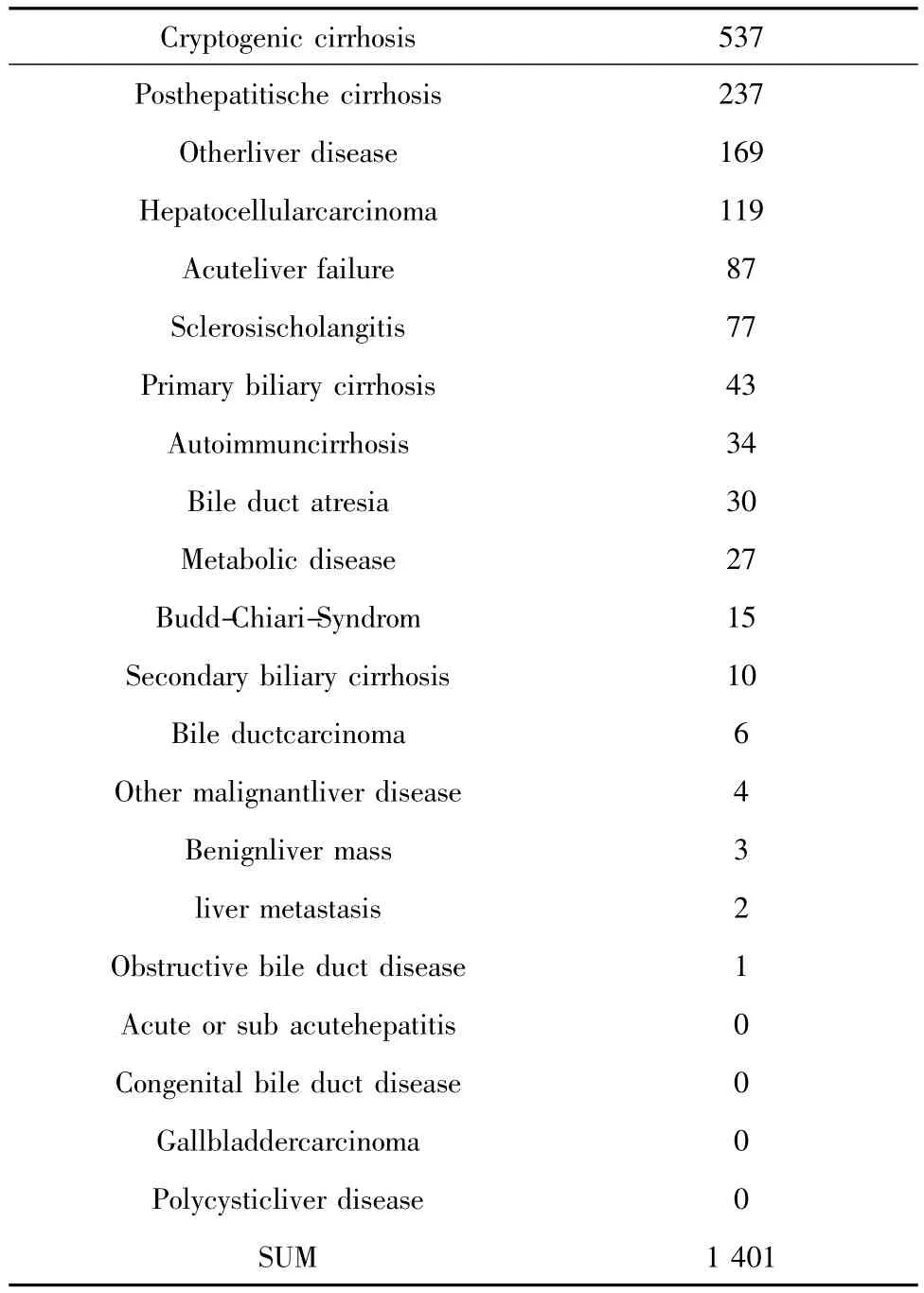
Table 4 Indication of liver transplantation in 2005,Germany表4 2005年德國肝移植適應證
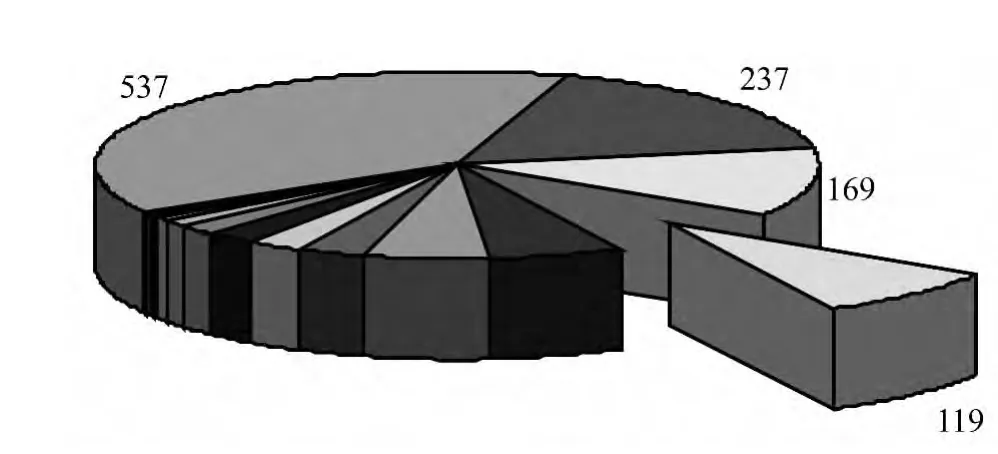
Fig.2 119 cases of LT with HCC accounted for 8%all Liver transplantations 2005 in Germany圖2 2005年德國119例肝癌肝移植占當年肝移植總量的8%
Liver transplantation at Hannover Medical School
From 1975 to 2006,2344 liver transplantations were performed at Hannover Medical School,included Cadeveric Liver Transplantation(CDLT),Living Donor Liver Transplantation(LDLT),split liver transplantation and domino liver transplantation.Of them,splitlivertransplantation,which was first successfully performed by Hannover Medical School in 1988,has become a mature surgical technique to expand the donor pool[37].
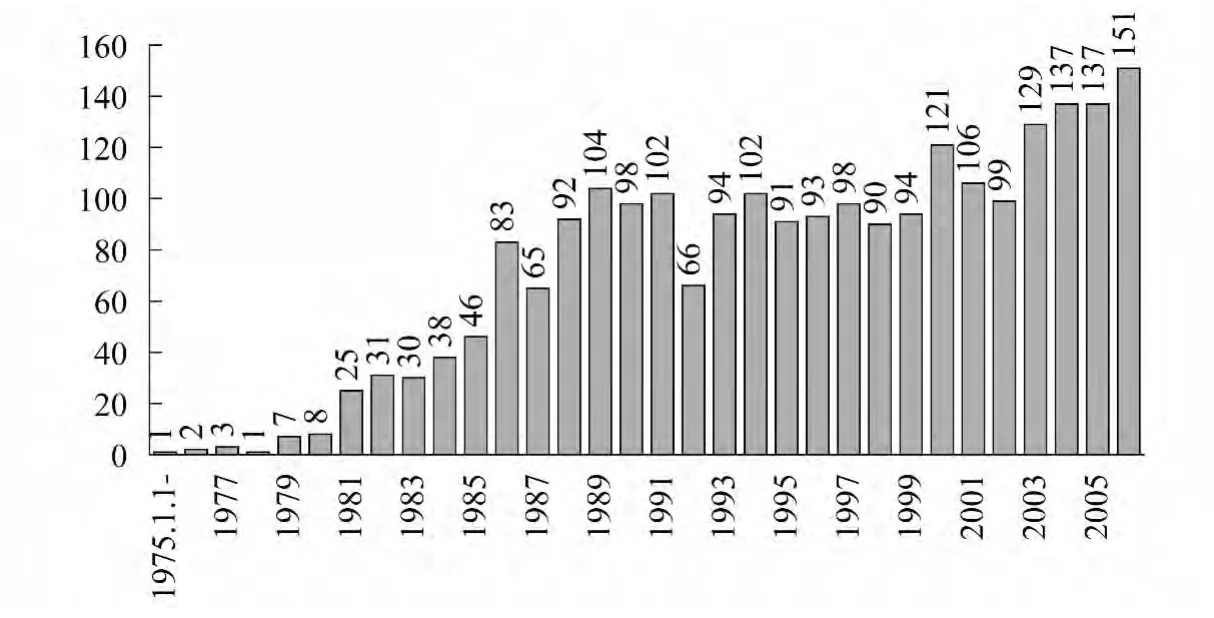
Fig.3 2344 liver transplantations were performed at Hannover Medical School圖3 截止2006年德國漢諾威醫學院已經開展2 344例肝移植
Current problems of LT in HCC
After 30 years,despite the fact that transplantation has changed the treatment strategy for HCC,some of the greatest challenges still remain.①Liver transplantation is the main option for patients with early HCC who are not optimal candidates for surgical resection.② Shortage of donors is its main limitation,as waiting for a liver allows the tumor to progress and induce exclusion from the waiting list and death.③The absence of randomized controlled trials hinders the establishment of the most effective therapy to prevent tumor progression while waiting.④Live donation may be a cost-effective approach if optimal results are expected and the mortality risk for the donor is kept low.⑤ Priority policies have to be developed and refined to provide a fair and effective distribution of cadaveric organs[38].
Livertransplantation (LT)is a rational therapeutic option for patients with hepatocellular carcinoma(HCC).Suitable selection criteria,active pre-transplantation treatment,and method of preventing recurrence lead better outcome.
[1] Feitelson MA.Parallel epigenetic and genetic changes in the pathogenesis of hepatitis virus-associated hepatocellular carcinoma[J].Cancer Lett,2006,239(1):10 -20.
[2] Lotze M FJ,Carr B.Hepatobiliary Neoplasms In:Devita VT,Rosenberg SA,eds.Cancer:principles and practice of oncology[M].Philadelphia:Lippincott,1993.
[3] Parkin DM,Bray F,Ferlay J,Pisani P.Estimating the world cancer burden:Globocan 2000[J].Int J Cancer,2001,94(2):153-156.
[4] El-Serag HB,Mason AC.Rising incidence of hepatocellular carcinoma in the United States[J].N Engl J Med,1999,340(10):745-750.
[5] Bosch FX,Ribes J,Diaz M,Cleries R.Primary liver cancer:worldwide incidence and trends[J].Gastroenterology,2004,127(5 Suppl 1):S5-S16.
[6] Sangiovanni A,Del Ninno E,Fasani P,et al.Increased survival of cirrhotic patients with a hepatocellular carcinoma detected during surveillance[J].Gastroenterology,2004,126(4):1005-1014.
[7] Bosch FX,Ribes J,Borras J.Epidemiology of primary liver cancer[J].Semin Liver Dis,1999,19(3):271 -285.
[8] The Worldhealth report(2003)shaping the future[R].World Health Organization,2003.
[9] Zhou XD,Tang ZY,Yu YQ,et al.Long-term survivors after resection for primary liver cancer.Clinical analysis of 19 patients surviving more than ten years[J].Cancer,1989,63(11):2201-2206.
[10] Belghiti J,Panis Y,Farges O,et al.Intrahepatic recurrence after resection of hepatocellular carcinoma complicating cirrhosis[J].Ann Surg,1991,214(2):114 -117.
[11] Starzl TE MT,Vonkaulla KN,Hemann G,Brittain,RS WW.Homotransplantation of the liver in humans[J].Surg Gynecol Obstet,1963,117(12):659 -676.
[12] Iwatsuki S,Gordon RD,Shaw BW,Jr.,Starzl TE.Role of liver transplantation in cancer therapy[J].Ann Surg,1985,202(4):401-407.
[13] O’Grady JG,Polson RJ,Rolles K,et al.Liver transplantation for malignant disease.Resultsin 93 consecutive patients[J].Ann Surg,1988,207(4):373 -379.
[14] Ringe B,Wittekind C,Bechstein WO,et al.The role of liver transplantation in hepatobiliary malignancy.A retrospective analysis of 95 patients with particular regard to tumor stage and recurrence[J].Ann Surg,1989,209(1):88 -98.
[15] Ismail T,Angrisani L,Gunson BK,et al.Primaryhepatic malignancy:the role of liver transplantation[J].Br J Surg,1990,77(9):983 -987.
[16] Olthoff KM,Millis JM,Rosove MH,et al.Is liver transplantation justified for the treatment of hepatic malignancies?[J].Arch Surg,1990,125(10):1261 -1266;discussion 1266 -1268.
[17] Haug CE,Jenkins RL,Rohrer RJ,et al.Liver transplantation for primary hepatic cancer[J].Transplantation,1992,53(2):376-382.
[18] Moreno Gonzalez E,Gomez R, Garcia I, et al. Liver transplantation in malignant primary hepatic neoplasms[J].Am J Surg,1992,163(4):395 -400.
[19] Penn I.Hepatic transplantation forprimary and metastatic cancers of the liver[J].Surgery,1991,110(4):726 - 734;discussion 734-735.
[20] Freeman RB,Jr.Transplantation for hepatocellular carcinoma:The Milan criteria and beyond[J].Liver Transpl,2006,12(11 Suppl 2):S8-S13.
[21] Ringe B,Pichlmayr R,Wittekind C,Tusch G.Surgical treatment of hepatocellular carcinoma:experience with liver resection and transplantation in 198 patients[J].World J Surg,1991,15(2):270-285.
[22] Iwatsuki S,Starzl TE,Sheahan DG,et al.Hepatic resection versus transplantation for hepatocellular carcinoma[J].Ann Surg,1991,214(3):221 -228;discussion 228 -229.
[23] Yokoyama I,Todo S,Iwatsuki S,Starzl TE.Liver transplantation in the treatment of primary liver cancer [J].Hepatogastroenterology,1990,37(2):188 -193.
[24] Llovet JM,Fuster J,Bruix J.Intention-to-treatanalysis of surgical treatment for early hepatocellular carcinoma:resection versus transplantation[J].Hepatology,1999,30(6):1434-1440.
[25] Mazzaferro V,Regalia E,Doci R,et al.Liver transplantation for the treatment of small hepatocellular carcinomas in patients with cirrhosis[J].N Engl J Med,1996,334(11):693 - 699.
[26] Bismuth H,MajnoPE,Adam R.Livertransplantationfor hepatocellular carcinoma[J].Semin Liver Dis,1999,19(3):311-322.
[27] Jonas S,Bechstein WO,Steinmuller T,et al.Vascular invasion and histopathologic grading determine outcome afterliver transplantation for hepatocellular carcinoma in cirrhosis[J].Hepatology,2001,33(5):1080 -1086.
[28] Bismuth H,Chiche L,Adam R,et al.Liver resection versus transplantation for hepatocellular carcinoma in cirrhotic patients[J].Ann Surg,1993,218(2):145 -151.
[29] Yao FY,Ferrell L,Bass NM,et al.Liver transplantation for hepatocellular carcinoma:expansion of the tumor size limits does not adversely impact survival[J].Hepatology,2001,33(6):1394-1403.
[30] Chan SC.Liver transplantation for hepatocellular carcinoma[J].Liver Cancer,2013,2(3 -4):338 -344.
[31] Livraghi T.Radiofrequency ablation,PEIT,and TACE for hepatocellular carcinoma[J].J Hepatobiliary Pancreat Surg,2003,10(1):67 -76.
[32] Jansen MC,van Hillegersberg R,Chamuleau RA,et al.Outcome of regionaland localablative therapiesforhepatocellular carcinoma:a collective review[J].Eur J Surg Oncol,2005,31(4):331-347.
[33] Moreno Planas JM,Lopez Monclus J,Gomez Cruz A,et al.Efficacy of hepatocellular carcinoma locoregional therapies on patients waiting for liver transplantation[J].Transplant Proc,2005,37(3):1484 -1485.
[34] Rust C,Gores GJ.Locoregional management of hepatocellular carcinoma.Surgical and ablation therapies[J].Clin Liver Dis,2001,5(1):161 -173.
[35] Ahrar K,Gupta S.Hepatic artery embolization for hepatocellular carcinoma:technique,patient selection,and outcomes[J].Surg Oncol Clin N Am,2003,12(1):105 -126.
[36] Zarrinpar A,Busuttil RW.Liver transolantation:past,present and future[J].Nat Rev Gastroenterol Hepatol,2013,10(7):434-440.
[37] Pichlmayr R,Ringe B,Gubernatis G,et al.Transplantation of a donor liver to 2 recipients(splitting transplantation)—a new method in the further development of segmental liver transplantation[J].Langenbecks Arch Chir,1988,373(2):127-130.
[38] Sala M,Varela M,Bruix J.Selection of candidates with HCC for transplantation in the MELD era[J].Liver Transpl,2004,10(10 Suppl 2):S4-S9.
肝細胞肝癌與肝移植
趙澤明1,Becker Thomas2,3,FAN Yue-zu1,Ringe Bastian2,Klempnauer Jürgen2
1.同濟大學附屬同濟醫院普外科,上海中國 200065;
2.漢諾威醫學院腹部與內臟移植外科,漢諾威德國 30625;
3.基爾大學醫院腹部與內臟移植外科,基爾德國 24105
肝細胞癌(HCC)是最常見的肝臟原發性惡性腫瘤。肝移植治療肝細胞癌(HCC)對合并肝硬化患者是根治性的治療,包括腫瘤和相關的癌前狀態,尤其是肝癌的發展源于慢性肝病的基礎上的患者。器官移植供體的短缺已導致等待時間延長,由于腫瘤的進展,從排隊序列中被剔除風險增加。新輔助治療,肝動脈化療栓塞(TACE),射頻消融(RFA)、經皮無水乙醇注射(PEI)作為過渡治療控制腫瘤的生長。盡管選擇標準的擴展是必要的,但它應該建立在良好設計的前瞻性研究的評估之上。本研究展現了德國包括單中心(漢諾威醫學院)在肝細胞癌肝移植方面的經驗,合理使用肝移植更有利于人類。
肝細胞癌;肝移植;活體供體肝移植;治療
R735.7;R657.3
A
2095-378x(2013)04-0219-06
趙澤明(1973-),男,副主任醫師,德國醫學博士,肝膽外科及消化道腫瘤診治。
范躍祖,男,醫學博士,教授,博士生導師。E-mail:fanyuezu@hotmail.com
猜你喜歡
天津醫科大學學報(2019年3期)2019-08-13 06:53:08
中成藥(2016年8期)2016-05-17 06:08:14
癌癥進展(2016年12期)2016-03-20 13:16:17
罕少疾病雜志(2016年5期)2016-03-11 16:34:44
吉林大學學報(醫學版)(2015年1期)2015-12-17 07:47:28
腫瘤預防與治療(2015年1期)2015-09-26 07:26:20
中國當代醫藥(2015年16期)2015-03-01 02:03:11
中國醫藥導報(2015年26期)2015-02-28 22:07:59
肝膽胰外科雜志(2015年4期)2015-02-27 11:12:34
肝膽胰外科雜志(2015年4期)2015-02-27 11:12:24
- 外科研究與新技術的其它文章
- NOTICE TO INVITE CONTRIBUTIONS
- Progress of Surgical Robot in Minimal Invasive Surgery
- The finite element analysis of cemented long and short stem prosthetic replacement in aged patients with comminuted intertrochanteric fracture
- ic fractures associated with anorec-tal injuries:emergency management strategies and mortality
- HOSPITAL PROFILE