
Optical sw itching based on magnetic resonance of sp lit ring resonator array
2010-05-10 08:10:58SHOUXiang,GANBen-xin,SUHong-yan等
中國光學 2010年4期
Optical sw itching based on magnetic resonance of sp lit ring resonator array
We demonstrate an all-optical switching of themagnetic resonance properties associated with ametallic Split Ring Resonator(SRR)array.The periodically spaced elements are fabricated on a high-resistivity silicon wafer and probed by using conventional Terahertz(THz)time-domain spectroscopy.We use a continuous-wave laser diode to generate carriers in the gaps of the SRR elements.Using a sufficient power,this optical excitation can create an effective short gap,which would switch the resonant properties of themetamaterial from that of an SRR array to that of a closed ring resonator array and leads to dramatic changes in the THz transmission.In the present experiment,the optically induced switching is associated with themagnetic resonance.However,with appropriate changes in the device structure,this approach can be extended to switch a medium with a negative real index of refraction to amedium with a positive real index of refraction.This opens the way to creat a broad new range of active devices.
optical switching;magnetic resonance;ring resonator array
1 Introduction
In recent years,there has been a great interest in studying artificially structured materials.The appeal of these structures,often referred to asmetamaterials,may be attributed largely to the fact that such materials can be engineered to exhibit properties that can be varied over amuch wider range than naturally occurring materials.As an example,metamaterials may be used to gain greater control over the propagation properties of electromagnetic radiation.One class of structures that has elicited significant attention recently includes media that exhibit a negative effective permeability or a negative effective refractive index.The electromagnetic properties ofmedia exhibiting these properties are characterized by a number of unique and unusual properties that were first discussed theoretically by Veselago[1]in more than three decades ago.
Since the initial demonstration of amaterial that exhibits a negative real index of refraction[2,3],numerous metal-dielectric structures have been proposed and fabricated that demonstrate equivalent properties[4-7].However,the structures used in the initial demonstration,composed of a combination of metallic split ring resonator(SRR)and thin metallic wire arrays,remain the most extensively studied.The SRR element is used to exhibit a negativemagnetic permeability[8],and the wires are used to exhibit a negative electric permittivity[9].With specific regard to split ring resonators,although the initialembodiments were designed for microwave studies,there has been significant work recently in demonstrating that these elements exhibit magnetic response at THz and mid-infrared frequencies[10-12].
A significant challenge in this field is the realization of active devices.To our knowledge,all previous experimental studies have focused on structures that are static.Active devices,however,would require the ability to dynamically alter the properties of thesemetamaterials.In principle,there are a number ofways to accomplish the effect.Focusing solely on the properties of SRRs,the resonance properties can be altered by creating large scale changes in the dielectric properties of the substrate medium,causing dynamic changes in the spacing between the rings in conventional double split ring resonator designs,or causing dynamic changes in the gap properties of the SRR elements[8].
In this paper,we experimentally demonstrate the all-optical switching of the magnetic resonance properties associated with a metallic SRR array.These periodically spaced magnetic elements are fabricated on a high-resistivity silicon wafer and probed by using conventional THz time-domain spectroscopy.Using an independent continuous-wave laser diode to illuminate the silicon surface,we generate charge carriers in the gaps of the SRR elements.With a sufficient optical power,this optical excitation can cause an effective short gap,which can switch the resonant properties of themetamaterial from that of an SRR array to that of a closed ring resonator array.This would correspond to the presence or elimination of the low frequency magnetic resonance.In presentexperimental embodiment,the probing THz beam is normally incident on the SRR array,so that themagnetic component of the electromagnetic field lies in the plane of the SRR.Therefore,if amagnetic response is observed,the associated permeability is not negative[12,13].However,with appropriate changes in the device structure,this approach can be extended to switch a medium with a negative real index of refraction to amedium with a positive real index of refraction.
2 Experimental details
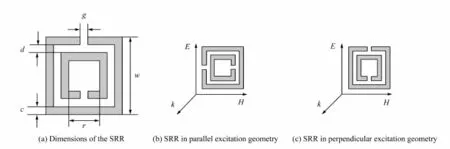
Fig.1 Schematic diagrams of a square double-ring SRR and excitation geometry.
We fabricate an SRR array on a 500μm thick,>10 kΩ·cm high-resistive silicon wafer.The individual array elements are patterned on a 300 nm aluminum layer using conventionalmetallization and photolithographic techniques.Fig.1(a)shows the schematic diagram of an individual SRR element along with the corresponding dimensions.The dimensions of the SRR elements used in this study are w=131μm,c=12.5μm,d=15μm,g=11μm and r=51μm and the space between the SRRs is 180μm on a square lattice.Themagnetic resonance frequency for the high-resistive silicon substrate lies at 0.13 THz,corresponding to a lattice spacing of~λ/13(λ=300μm at 1 THz).The SRR dimensions,lattice spacing,and magnetic resonance frequency are chosen based on power considerations of the optical(laser diode)excitation source described below.For the purposes of comparison,we also fabricate a nominally identical Closed Ring Resonator(CRR)array.
A schematic diagram of the experimental setup used for THz time-domain spectroscopy[14]is shown in Fig.2.We use a mode-locked Ti:sapphire laser as the optical source to generate and detect the THz pulses.The laser oscillator operates at a central wavelength of 820 nm with a repetition rate of 89 MHz.Conventional photoconductive devices are used for both the emission and coherent detection of the transmitted THz electric field.The array is placed at the center of the two off-axis parabolicmirrors in the THz spectroscopy system as shown in Fig.2.The THz beam is normally incident on the structure and the array is aligned in the THz beam path where the incident electric field lies parallelly to the gaps in the individual SRR element.The THz field geometries are shown schematically in Fig.1(b)and Fig.1(c).
In order to investigate the optical switching properties of the magnetic response associated with the SRR array,a continuous-wave laser diode which is operated at~830 nm and with an average power of up to 150 mW is used to alter the conductivity of the silicon regions located in the gaps of the SRR elements,as shown in Fig.2.The optical beam is focused to a spot size of~1 mm on the SRR array.And then we investigate the THz transmission properties through the SRR array as a function of optical power of incident laser diode.Upon optical illumination of the array,photoexcited charge carriers are generated near the surface of the semiconductor substrate.For themaximum optical excitation used,we estimate that the carrier density is approximately 3× 1014cm-3.Despite the spatial non-uniformity of the optical excitation beam,we expect the carrier density across the probed sample region to be approximately uniform,which is given by the long carrier recombination time(τr~25 ms)of high resistivity silicon[15].Optical excitation of the silicon in the gap regions of the SRR elements causes a sharp reduction in the resistance.In the presence of very high optical intensities,the gapswould be effectively shorted,so that the SRR elements would appear as Closed Ring Resonator(CRR)elements.The transmission properties of SRR arrays are dramatically different from those of CRR arrays[8,12].As a consequence of fabricating on a silicon wafer,the optical pump illumination increases the free charge carrier density across the entire sample,thereby the transmission of THz radiation through the wafer is reduced.Therefore,for each laser diode power level used,reference transmission spectra are taken by using an identical blank high-resistive silicon substrate under identical optical illumination conditions.
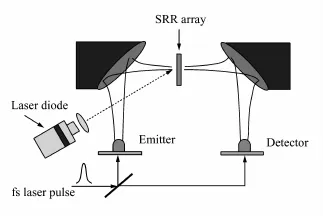
Fig.2 Schematic diagram of experimental setup.
In contrast to conventional optical measurementswhere the transmitted optical power is measured,THz time-domain spectroscopy allows for the directmeasurement of the THz electric field,yielding both amplitude and phase information[16,17].By transforming the time-domain data to frequency domain,we are able to determine the magnitude and phase of the amplitude transmission coefficient,t(v)independently,which is used for the SRR and CRR structures and has the relation as:
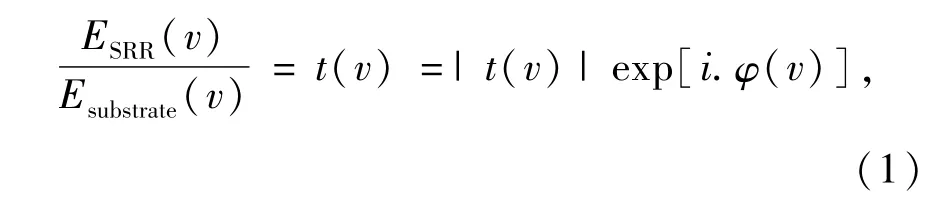
In Eq.(1),ESRRand Esubstrateare the transmitted THz fields through the metallic array and a blank substrate,respectively;|t(v)|andφ(v)are the magnitude and phase of the amplitude transmission coefficient,and v is the THz frequency.As noted above,both time-domain waveforms are obtained under identical optical illumination conditions.
3 Experimental results and discussion
Fig.3 shows the amplitude and phase of the transmission spectra of the SRR array for both parallel and perpendicular to the gaps in the resonators,and the spectra for the CRR array aswell.Aswe can see above,the THz beam is normally incident on the SRR array.Therefore,themagnetic field lies in the plane of the resonators and can not contribute to the desired magnetic resonance.However,if the electric field of the THz pulse is aligned parallelly to the electric field direction within the capacitive gap of the SRR,the incident THz electric field can couple to the magnetic resonance.This result has been demonstrated experimentally[13].Thus,for the data corresponding to the parallel excitation geometry of the SRR,two separate resonances are observed in the amplitude transmission spectra of SRR.The magnetic resonance occurs at~0.13 THz,while the higher frequency electrical resonance occurs between 0.25 THz and 0.3 THz.It is worth while to note that the spectra for the SRR(perpendicular orientation)and CRR are almost identical.For last two measurements,there is a slight blue shift in the high frequency(electrical)resonance.This result is consistent with previous measurements with similar structures[12].
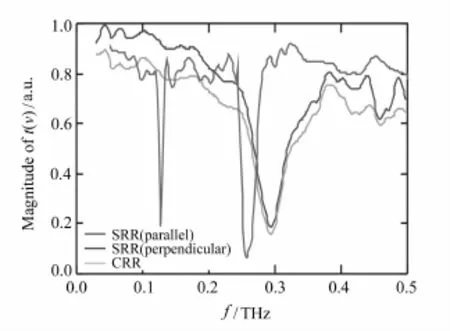
Fig.3 Amplitude transmission coefficients of closed and open SRR structures.
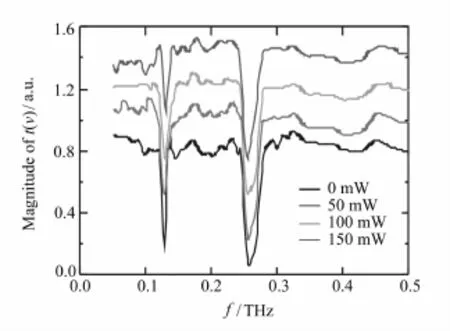
Fig.4 Transmission spectra for SRR array fabricated.
Fig.4 shows the amplitude of the transmission spectrum through the SRR array(parallel orientation)as a function of the laser excitation power.There are several noteworthy points regarding the transmission resonances which appear in the amplitude spectra in Fig.4.The electrical resonance at~0.26 THz changes a little with increasing optical power.We note that the primary difference in the transmission spectrum between an appropriately oriented SRR array(Fig.1(b))and a CRR array is that the latter array does not exhibit amagnetic resonance and demonstrates a slight blue shift in the higher frequency electrical resonance.Even for the highest optical illumination power of150mW,we do not observe any significant spectral variation in the lineshape of the electrical resonance at~0.26 THz.It is necessary to observe this result if a far greater optical power is used.It is also worth noting that the transmission spectrum for the SRR array(perpendicular orientation)is essentially unchanged as a function of the laser diode optical power(not shown).It is not surprising,since the SRR array(perpendicular orientation)and a CRR array exhibit nearly identical transmission properties.
With specific regard to the magnetic resonance at~0.13 THz as shown in Fig.4,it is apparent that the depth of the resonance is progressively reduced with the increase of optical power.This change in the resonance shape is directly related to the generation of charge carriers in the gap regions of the SRR elements,and it leads to a reduction of the resistance.In order to quantify this observation,we measure the magnitude of this transmission dip of four traces as shown in Fig.4.This data,as shown in Fig.5,depicts an approximately linear decrease as a function of optical intensity.If we assume a continued linear response in the magnitude of the resonance dip as a function of optical power,it should require~650 mW of laser diode power to completely switch off the magnetic resonance.Because this value appears very large,it is important to note that this is not the actual power which is necessary to switch the magnetic resonance.The gaps in the SRR elements represent less than 1%of the sample area,hence,if the optical illumination could be appropriately focused,only~7 mW of cw laser power would be necessary to completely switch the magnetic resonance.In principle,this may be accomplished using an appropriately designed plastic lens array.Such a plastic array should not appreciably absorb the incident THz radiation and can be largely non-perturbative to the propagation properties of the THz beam.
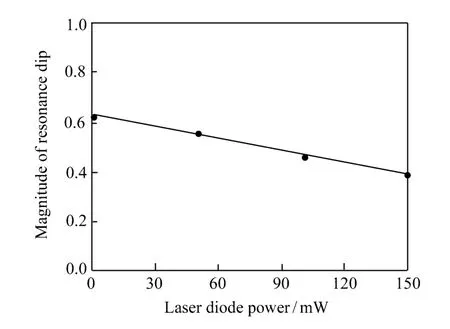
Fig.5 Magnitude ofmagnetic resonance dip at~0.13 THz from the SRR array versus the laser diode optical illumination power.The line represents a linear least-squares fit to the data.
4 Conclusions
In conclusions,we have demonstrated an all-optical switching of themagnetic resonance properties associated with ametallic SRR array.We use a continuous-wave laser diode to generate carriers in the gaps of the SRR elements.With a sufficient optical power,this optical excitation can create an effective short across the gaps,which alter the resonant properties of themetamaterial from thatof a SRR array to that of a closed ring resonator array.Using only 150 mW to illuminate the entire sample surface,we observe a 33%reduction in themagnitude of themagnetic resonance.However,by appropriately focusing the optical source,we believe that relatively modest optical power levels(in the 10-20 mW range)are necessary to achieve the complete switching.Furthermore,the demonstration discussed here is not limited to magnetic resonance switching.With appropriate changes in the device structure,this approach can be extended to switch a medium with a negative real index of refraction to amedium with a positive real index of refraction.This opens the way to realize a broad new range of active devices.
Reference:
[1]VESELAGO V G.The electrodynamics of substances with simultaneously negative values ofεandμ[J].Sov.Phys.Usp.,1968,10:509-514.
[2]SMITH D R,PADILLAW J,VIER D C,et al..Compositemedium with simultaneously negative permeability and permit-tivity[J].Phys.Rev.Lett.,2000,84:4184-4187.
[3]SHELBY R A,SMITH D R,SCHULTZ S.Experimental verification of a negative index of refraction[J].Science,2001,292:77-79.
[4]SHALAEV V M,CAIW,CHETTIAR U K,et al..Negative index of refraction in opticalmetamaterials[J].Opt.Lett.,2005,30:3356-3358.
[5]BULU I,CAGLAYAN H,OZBAY E.Experimental demonstration of labyrinth-based left-handed metamaterials[J].Opt.Express,2005,13:10238-10247.
[6]ZHANG S,FANW,PANOIU N C,et al..Experimental demonstration of near-infrared negative-indexmetamaterials[J].Phys.Rev.Lett.,2005,95:137404/1-4.
[7]ZHOU J,ZHANG L,TUTTLE G,et al..Negative indexmaterials using simple shortwire pairs[J].Phys.Rev.B,2006,73:041101/1-4.
[8]PENDRY JB,HOLDEN A,ROBBINSD D,et al..Magnetism from conductors and enhanced nonlinear phenomena[J].IEEE Trans.Microwave Theory Technol.,1999,47:2075-2084.
[9]PENDRY J B,HOLDEN A,STEWART W,et al..Extremely low frequency plasmons in metallic mesostructures[J].Phys.Rev.Lett.,1996,76:4773-4776.
[10]KATSARAKISN,KONSTANTINIDISG,KOSTOPOULOSA,et al..Magnetic response of split-ring resonators in the farinfrared frequency regime[J].Opt.Lett.,2004,30:1348-1350.
[11]YEN T J,PADILLAW J,FANG N,et al..Terahertzmagnetic response from artificialmaterials[J].Science,2004,303:1494-1496.
[12]LINDEN S,ENKRICH C,WEGENER M,et al..Magnetic response ofmetamaterials at100 terahertz[J].Science,2004,306:1351-1353.
[13]KATSARAKISN,KOSCHNY T,KAFESAKIM,et al..Electric coupling to themagnetic response of split ring resonators[J].Appl.Phys.Lett.,2004,84:2943-2945.
[14]GRISCHKOWSKY D.Frontiers in Nonlinear Optics[M].Philadelphia:Institute of Physics Publishing,1992.
[15]SZE SM.Physics of Semiconductor Devices[M].New York:Wiley,1981.
[16]NUSSM C,ORENSTEIN J.Terahertz time-domain spectroscopy[M].Berlin:Springer,1998.
[17]HAN P Y,TANIM,USAMIM,et al..A direct comparison between terahertz time-domain spectroscopy and far-infrared Fourier transform spectroscopy[J].J.Appl.Phys.,2001,89(4):2357-2359
SHOU Xiang1,GAN Ben-xin2,SU Hong-yan2,BAILu-guang1
(1.Cao Group,Salt Lake City,USA;
2.Huai′an College of Information Technology,Huai′an 223003,China)
TB34;TN15
A
1674-2915(2010)04-0385-06
2010-03-15;
2010-05-13
壽 翔(1973—),男,浙江杭州人,電子工程博士,主要從事醫用激光儀器的研究與開發。
蘇紅艷(1982—),女,江蘇淮安人,講師,碩士,主要從事控制工程及應用的研究。
E-mail:xiangshou@gmail.com
甘本鑫(1982—),男,安徽當涂人,講師,碩士,主要從事控制工程及應用的研究。E-mail:tom_gbx@163.com
猜你喜歡
水泥技術(2024年1期)2024-02-01 12:38:46
水泥技術(2023年4期)2023-09-07 08:52:14
體育科技文獻通報(2022年3期)2022-05-23 13:46:54
天津外國語大學學報(2021年3期)2021-08-13 08:32:18
遼金歷史與考古(2021年0期)2021-07-29 01:06:54
科技傳播(2019年22期)2020-01-14 03:06:54
建材發展導向(2019年11期)2019-08-24 06:35:44
民用飛機設計與研究(2019年4期)2019-05-21 07:21:24
通信電源技術(2018年3期)2018-06-26 08:07:08
汽車工程學報(2017年2期)2017-07-05 08:13:02
