WiMAX and Its Applications (4)
2008-06-20 12:50:36LiuDanpuHaoJianjunYueGuangxin
ZTE Communications 2008年4期
Liu Danpu,Hao Jianjun,Yue Guangxin
(Beijing University of Posts and Telecommunications, Beijing 100876, P.R.China)
7 Application
W orldwide Interoperability for Microwave Access(WiMAX)Forum defines five application scenarios that are supported by WiMAXnetwork architecture,namely fixed,nomadic,portable,simple mobiltiy and full mobility.Figure 9 illustrates a typical application scenario of WiMAX.
(1)Fixed Scenario
Fixed scenario is the basic business model of WiMAXnetwork,mainly applied in Customer Premises Network(CPN)access,Local Area Network(LAN)connectivity and Base Station(BS)connectivity.
·CPNaccess:Any group(e.g.enterprise and school)or personal
terminal can access its own CPNvia a Subscriber Station(SS),and enjoy
broadband Internet services through the air interface of WiMAXnetwork.The CPN device that is connected to the SSvia the standard Ethernet or E1 interface can be a network device(e.g.,router,switch,or hub)or another wireless access point(e.g.,Wireless Fidelity(Wi-Fi)hotspot).
This access mode is similar to xDSL and other cable connections.As a result,it is an ideal solution for replacing existing cable connection methods.
·LAN connectivity:For a large enterprise which has several branches in a metropolitan area,the WiMAXfixed wireless broadband access system can be deployed to implement wireless connection between the headquarters and the LANof each branch.This access mode avoids the trouble of laying private lines and allows access service to be delivered in a short time.In constructing private networks for customers,it is more advantageous than wired connection.
·BSconnectivity:With E1 interface provided by WiMAXfixed broadband wireless access system,the mobile BSs of a GSM network or a 3G network can be interconnected.It can also serve as backhaul links to connect BSs back to the Mobile Switching Center(MSC).
(2)Nomadic Scenario
Nomadic access service is developed on the basis of fixed access service.In nomadic scenario,the terminals can access an operator's WiMAXnetwork via different access points.But during each session,a user terminal can only access point-by-point,and it cannot be switched over different BSs.In the nomadic and later scenarios,user terminals are allowed to roam among different operator networks,and terminal's power management is achieved.For example,after a WiMAX wireless network card is installed,a notebook PC can access Internet in different places,but during a session,the mobility of the PCis not supported.
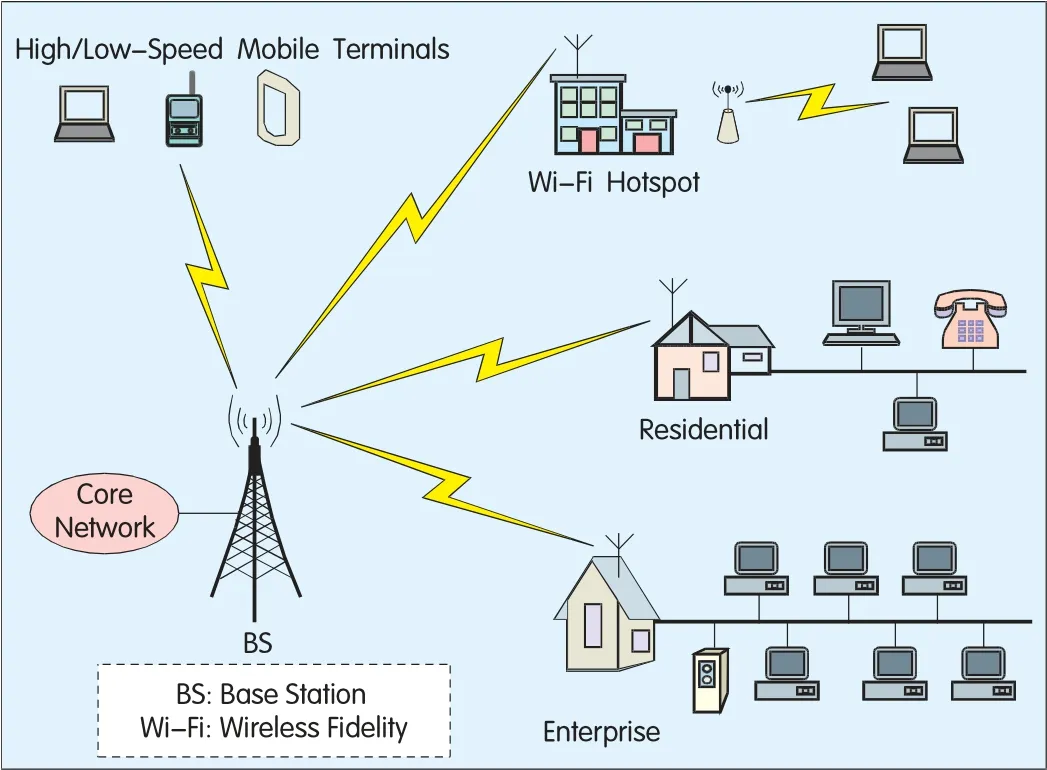
Figure 9.?Typical application scenario of WiMAX.
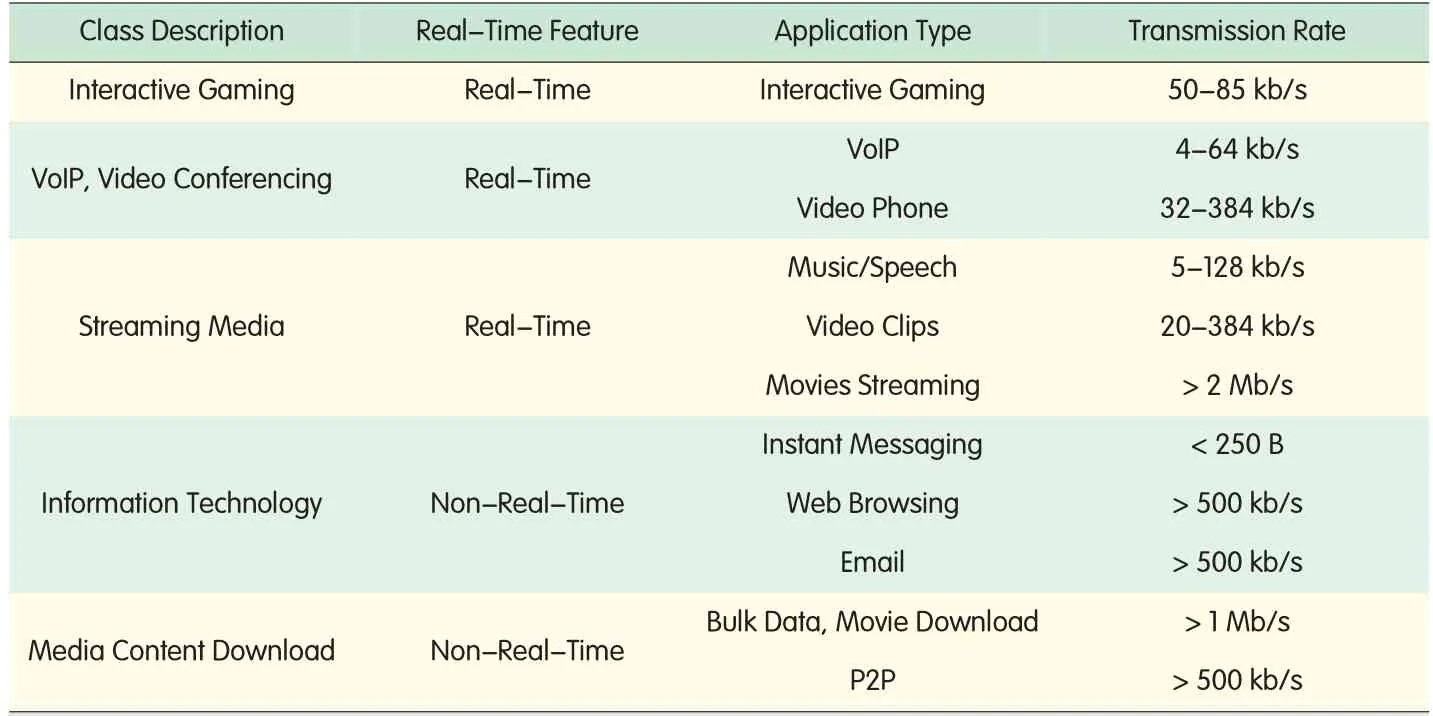
▼Table 1. WiMAX service classes
(3)Portable Scenario
This scenario allows the terminals to switch over different BSs during a session.During a handoff,the user may experience service interruption,delay or reduced Quality of Service(QoS)for up to 2 seconds.The quality of handoff is"best effort"delivery.Upon completion of the handoff,TCP/IPapplication refreshes current IPaddress or rebuilds a new IP address.One example of this scenario is a laptop PC installed with a WiMAX wireless network card.In this case,the user can walk at a speed of about 1.5 km/h while maintaining his/her laptop's communication with the network.
(4)Simple Mobility Scenario
The simple mobile service is an extension of portable service.In this scenario,a user can deploy a WiMAX terminalto make high-speed wireless data communication when he/she is walking,driving or taking a bus.But once the travelling speed reaches 60-120 km/h,the data transmission rate may slightly decrease.This scenario can definitely controlthe quality of handoff:The delay in an inter-IPsubnet handoff is less than 1 second,while the delay in an intra-IPsubnet handoff is less than 150 ms;the data transmission interruption is no more than 150 ms.After the handoff,the QoSwill rise up to its original class.This scenario requires the terminal to support sleep mode,idle mode and paging.
(5)Full Mobility Scenario
In this scenario,the user can move at a speed more than 120 km/h with broadband wireless access service not being interrupted.When there is not any network connected,the user terminal goes into low-power consumption mode.As for the quality of handoff,more rigorous requirements are imposed:The total handoff delay is less than 50 ms,and the data transmission interruption is no more than 5 ms.Like simple mobility scenario,the fullmobility network requires the terminal to support sleep mode,idle mode,and paging.
The mobile data services are main applications of simple mobility and full mobility scenarios.They are also services occupying a considerable number of radio resources.Roughly,these services fall into five classes,that is,interactive gaming,VoIPand video conference,streaming media,information technology,and media content download(store and forward).
The main features of each service class are listed in Table 1.
8 Hot Topics on WiMAX
8.1 Spectrum Allocation
Currently,WiMAXnetworks have been successively put into commercial use.Up to 2007,more than 700 enterprises around the world have been granted to operate WiMAXnetworks.Among them,275 operators are conducting WiMAX
pilot tests.In 2004,Korea Telecom took the lead to introduce its mobile WiMAX system,i.e.WiBro.In 2007,American telecom operator Sprint announced that it would invest 5 billion USdollars to construct WiMAXbroadband wireless network.In addition,the telecom operators in Pakistan,India,Russia and Australia are trying to make use of WiMAXnetworks for broadband network coverage of remote regions as well as broadband wireless service delivery in urban areas.
However,in recent years,the development of WiMAXtechnology suffers the spectrum allocation problem.IEEE 802.16 supports 10-66 GHz bands and the bands under 11 GHz.The transmission in 10-66 GHz bands relies on Line of Sight(LOS),so outdoor antennas are required.Consequently,these bands are applied in limited situations,mainly used for enterprises and to offer fixed wireless access.The bands under 11 GHz,which are Non-Line of Sight(NLOS)transmission bands,can realize indoor coverage,so outdoor antennas are unnecessary.Moreover,with the mobility function enhanced,mobile data services can be provided.Although WiMAXnetwork can work in an unlicensed band,it can deliver carrier-class services only in licensed bands.Therefore,the WiMAXindustry is trying to find frequencies within 2-6 GHz bands,especialfrequencies lower than 3 GHz.At present,the available bands differ from one country to another.According to existing allocation mechanisms,the frequencies allocated to each WiMAXoperator are far from meeting the requirements for large-scale cellular networking.WiMAXForum expects a globally uniform frequency spectrum in 2.5 GHz or 3.5 GHz band to be allocated for WiMAXstandard,but it is stillunknown whether enough spectrums can be obtained.
8.2 WiMAX vs. 3G
In case of full mobility scenario,the WiMAXsystem performs almost the same as a next generation communication system.And compared with 3G networks,mobile WiMAX networks transmit data faster and cost less.As a result,since the very beginning of WiMAX,the issue whether WiMAXand 3G networks compete with each other has been discussed within the telecom industry.To get larger space for survival and development,WiMAXpresents itself as a broadband wireless Metropolitan Area Network(MAN)technology,acting as a supplement rather than a substitute of 3G technologies.This has been generally agreed within the WiMAX society.However,the lack of a globally unified spectrum has greatly restricted the development of WiMAX.Therefore,at the beginning of 2007,supported by US government,WiMAXForum changed its strategies and applied for joining 3G family in order to share the 3G spectrum resources allocated by the ITU.In October 2007,WiMAX,in the name of"OFDM WMN TDD",became the fourth 3G standard,following European Wideband Code Division Multiple Access(WCDMA),American CDMA 2000,and Chinese Time Division-Synchronous Code Division Multiple Access(TD-SCDMA).
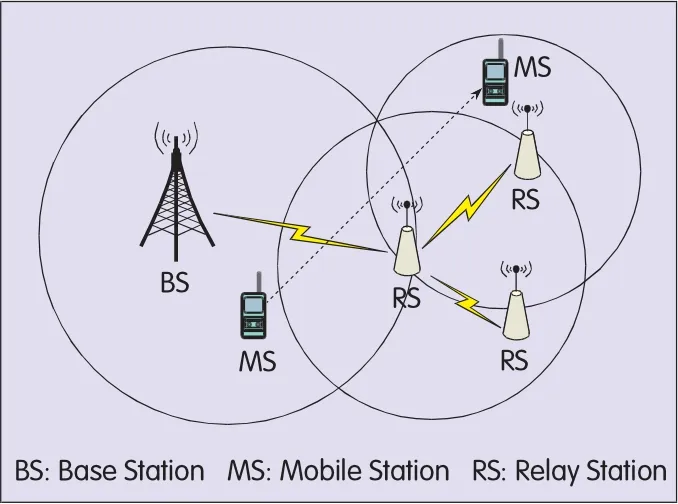
▲Figure 10. Mobile multi-hop relay.
Among the first three 3G standards,CDMA 2000 and WCDMAare Frequency Division Duplex(FDD)-based,while TD-SCDMA is based on Time Division Duplex(TDD)technology.ITU classifies WiMAXas TDD technology and does not permit it to use FDDbands.So far,no spectrum has been assigned to WiMAX.Apparently,WiMAXnetwork is likely to share TDD bands with TD-SCDMA network.Except for China,most of the 3G TDDspectrums are still being not used.Therefore,WiMAX's joining into 3G family is very helpful for solving its bottleneck problem,i.e.spectrum problem.Meanwhile,Chinese 3G standard,i.e.TD-SCDMA,has to face a competitor.No doubt,these two standards will stand in competition with each other for both markets and spectrum resources.
Some traditional telecom operators do not regard WiMAXas a real mobile communication technology because it performs much poorer than 3G systems in terms of handoff and roaming.For instance,it does not support seamless handoff when the terminal travels.Besides,few chips,terminals and devices in the markets are compliant with WiMAXstandard,and only WiMAXdata network cards are available currently.The WiMAXhandsets for commercial use will not be put into market until the end of 2008,let alone the timetable for terminals'consistency test.Hence,it is necessary to speed up WiMAXtechnical evolution and terminaldevelopment.Only doing so,WiMAXcan survive the intensive competition with similar technologies and achieve worldwide application.
8.3 IEEE 802.16j and IEEE 802.16m
The technical evolution of WiMAXdoes not stop at IEEE 802.16e.To improve the network performance further and enable WiMAXto be a next generation mobile communications system,IEEEhas started to make new standards for air interface technologies,i.e.IEEE 802.16j and IEEE 802.16m,which have attracted great attention and participation of many famous manufacturers in the world.
IEEE 802.16j can be regarded as an upgrade version of IEEE 802.16e.Its core concept is to reduce fading of shadow effect and to eliminate dead angles of transmission in radio transmission environment by ways of Mobile Multi-hop Relay(MMR)technology,thus enlarging network coverage,increasing system capacity and balancing the load.As shown in Figure 10,MMRintroduces low-cost Relay Stations(RSs)between a BSand a SSfor signal relaying.The proper arrangement of RSs can avoid bad transmission paths and reduce signal fading as well.Besides,the RS can adjust the power for forwarding signals based on actual situations,which can improve system capacity further.
However,the introduction of RSbrings a series of new problems.For example,complication of scheduling at Media Access Control(MAC)layer,guarantee of end-to-end QoSand selection of optimal hops.Besides,one principle made by IEEE 802.16jworking group is not to change original SSs,which is no doubt a great challenge for standard makers.In August 2007,the first version of IEEE 802.16j standard was drafted out,which is now in the process of voting.It is expected to be finalized in the second half of 2008.

IEEE 802.16m is the next generation of IEEE 802.16e,aiming to be a standard for fourth generation mobile telecom system"International Mobile Telecommunications-Advanced"(IMT-Advanced).Its target transmission rate is 1 Gb/s in case of slow movement and 100 Mb/s in case of quick movement.This standard will be downward compatible and will enhance the performance of broadcasting,multimedia,and VoIPservices.It may adopt technologies quite different from those in IEEE802.16e,and develop new SSs.The working group of IEEE 802.16m was established in December 2006.At present,only technical requirements have been defined.The standard is expected to be released in 2009.
9 Conclusions
WiMAXsystem was first introduced as a broadband wireless system.In the physical layer,it uses such advanced technologies as Multiple-Input Multiple-Output(MIMO),Orthogonal Frequency Division Multiple Access(OFDMA)and adaptive modulation/encoding to improve its data transmission rate;in MAC layer,it enlarges its system capacity and delivers QoS-guaranteed data transmission services by means of adaptive resource scheduling strategies;in the network layer,it adopts all-IPnetwork architecture to support mobility and roaming as wellas to guarantee end-toend QoS.After WiMAXjoins 3G family,the WiMAXsociety continues to improve the core network technology of WiMAX system and tries to evolve it toward a next generation mobile communication system by making the standard IEEE 802.16m.Due to the unique technical advantages of the system and the continuously upheating participation of manufacturers in research and development,we believe WiMAX terminals and handsets will come into the market in near future and WiMAXwill become a necessary technology for public telecom services.(The end)